

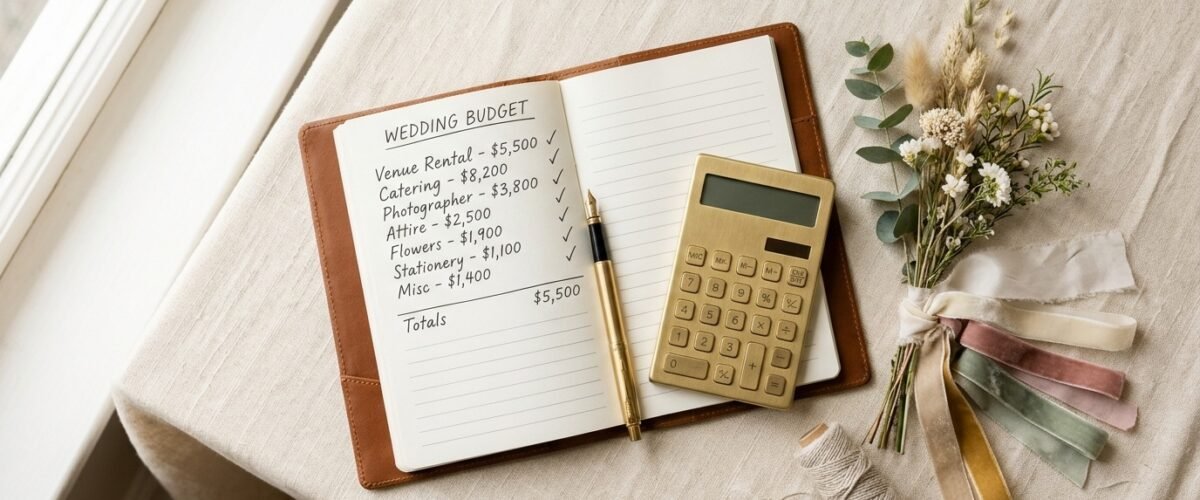
To begin, learning how to make a wedding budget requires establishing realistic total financial parameters before scheduling tours or contacting vendors. Specifically, in modern metropolitan markets, couples spend thirty-two thousand to forty-eight thousand dollars to host one hundred guests comfortably. However, industry data reveals a common challenge. Specifically, seventy-two percent of couples exceed preliminary budgets by seven thousand four hundred dollars. This cost inflation happens quickly. Specifically, couples calculate raw food pricing without accounting for service fees, sales taxes, and production rentals.
Specifically, as a lead wedding coordinator with fourteen years managing luxury wedding budgets, I audit client spreadsheets every week. Additionally, most budget deficits stem from emotional spending during the early planning months and forgetting essential back-end production costs. When you understand exactly where every dollar flows, you maintain complete financial authority over your celebration. This financial blueprint shows you how to make a wedding budget with proven allocations. In addition, contract safeguards and cash flow schedules keep your money secure.
Master Expense Allocation Table When Learning How to Make a Wedding Budget
Before allocating money to suppliers, establish firm boundaries. Specifically, set strict percentage limits across every operational category. Specifically, the following allocation benchmarks reflect realistic financial distributions for professional weddings.
| Wedding Expense Category. | Recommended Allocation. | $35,000 Budget Model. | $50,000 Budget Model. | $75,000 Budget Model. | Lead Coordinator Guidance. |
|---|---|---|---|---|---|
| Venue, Catering & Bar. | 45% to 50%. | $15,750. | $22,500. | $33,750. | Includes facility fee, catering, alcohol, and service staffing. |
| Photo & Video Production. | 12% to 14%. | $4,200. | $6,000. | $9,000. | Covers full-day coverage, raw footage delivery, and print rights. |
| Attire, Hair & Makeup. | 8% to 9%. | $2,975. | $4,250. | $6,375. | Includes gowns, tailoring alterations, hair trials, and shoes. |
| Entertainment & Music. | 7% to 9%. | $2,800. | $4,000. | $6,000. | Covers live ceremony sound, cocktail acoustic, and DJ lighting. |
| Florals, Decor & Styling. | 8% to 10%. | $2,800. | $4,000. | $6,000. | Covers bridal bouquets, ceremony arch, and guest centerpieces. |
| Month-Of Wedding Coordinator. | 6% to 8%. | $2,100. | $3,000. | $4,500. | Covers timeline logistics, layout management, and day-of execution. |
| Invitations, Paper & Postage. | 2% to 3%. | $875. | $1,250. | $1,875. | Covers save-the-dates, formal suites, programs, and return postage. |
| Wedding Bands & Rings. | 2% to 3%. | $875. | $1,250. | $1,875. | Covers metal wedding bands, sizing adjustments, and jewelry insurance. |
| Guest Favors & Transportation. | 2% to 3%. | $875. | $1,250. | $1,875. | Covers guest shuttle buses, parking attendants, and welcome amenities. |
| Contingency Reserve Buffer. | 5% to 7%. | $1,750. | $2,500. | $3,750. | Reserved strictly for unexpected weather fees and overtime hours. |
| Total. | 100%. | $35,000. | $50,000. | $75,000. | All categories combined. |
Related: Wedding Budget Planner: Free Printable Spreadsheet and Spending Checklist
The Three Foundational Steps When Deciding How to Make a Wedding Budget
When couples begin planning their wedding finances, they often jump directly into booking vendors before establishing core fiscal boundaries. This premature commitment creates severe cash shortages later in the planning process. Therefore, you must follow three foundational financial steps to build a resilient fiscal strategy.
Step 1: Calculating the True Net Household Contribution
First, inventory all guaranteed financial contributions before calculating a single line item. First, schedule private discussions with contributing family members to verify exact dollar commitments. Instead, avoid relying on vague promises like helping with catering or covering flowers. Instead, secure specific numerical commitments and clarify disbursement dates. For example, determine whether parents intend to wire funds immediately or pay specific vendor installments directly.
Next, audit your monthly household discretionary income and existing savings. Calculate how much money you can save each pay period. Divert these funds into a dedicated account without accumulating credit card debt. Suppose your wedding date is fourteen months away. Saving eight hundred dollars monthly then adds eleven thousand two hundred dollars in cash. Finally, combine your verifiable family gifts with your personal savings accumulation. Consequently, this total number represents your definitive gross budget ceiling.
Step 2: Guest Count Multiplier Math and Hard Headcounts
Second, recognize that guest count acts as the primary cost multiplier in wedding finance. Specifically, every invited attendee influences catering charges, bar consumption, table linen rentals, centerpiece counts, and printing quantities. For instance, increasing your guest list by twenty people does not simply add twenty dinner entrees. Twenty additional guests require two extra tables and twenty chairs. Additionally, you need extra linens, napkins, favors, and two centerpieces. Consequently, twenty additional attendees actually cost between two thousand eight hundred and four thousand dollars in aggregate expenses.
Therefore, draft your initial guest list with strict discipline. Next, categorize your list into immediate family, close social circle, and extended acquaintances. In addition, establish firm boundaries regarding plus-ones and workplace colleagues. Consequently, trimming fifteen to twenty names from your initial list immediately frees up substantial capital to reallocate toward priority vendors.
Step 3: Ring-Fencing a Non-Negotiable Contingency Buffer
Third, isolate five to seven percent of your budget immediately. Place these funds into a separate emergency contingency account. Instead, never allocate this money to standard vendor contracts or decorative upgrades. Instead, keep this capital untouched until sixty days before your celebration. Throughout your planning timeline, unexpected requirements always emerge. For example, a rainy forecast may require last-minute tent sidewalls. Similarly, an outdoor ceremony site might mandate unexpected electrical generator rentals. Consequently, having three thousand to five thousand dollars ring-fenced prevents financial panic when unforeseen logistical demands arise.
The Real Per-Person Price Tag: Deconstructing Catering and Bar Math
Catering and beverage service represents nearly half of your overall investment. However, promotional caterer menus display base food prices that deceive inexperienced planners. Understanding the real per-person price formula is critical when managing overall wedding finances.
The Plus-Plus Calculation: Administrative Fees and Sales Tax
First, calculate the compound effect of administrative charges and sales taxes. In the catering industry, this is known as plus-plus. When a venue quotes a plated dinner at ninety dollars per person, that base figure excludes mandatory additions. For example, the venue adds a twenty-two percent administrative charge. This brings the cost to one hundred nine dollars and eighty cents. Next, your local municipality levies an eight percent sales tax on both food and service fees. Consequently, that ninety-dollar dinner plate actually costs one hundred eighteen dollars and fifty-eight cents per attendee.
Additionally, clarify whether the administrative charge covers server gratuity. In many commercial facilities, administrative fees represent venue operating revenue. If the fee does not go to staff, plan ahead. Specifically, you must add an additional fifteen to twenty percent cash gratuity. As a result, a ninety-dollar entree escalates significantly. Each guest costs one hundred thirty-six dollars. Always demand a fully itemized per-person quote. Ensure it includes taxes, service charges, and gratuity before comparing catering proposals.
Bar Packages: Per-Person Flat Rate vs Consumption Billing
Next, evaluate beverage service models carefully to prevent bar bill surprises. Venues typically offer two billing options: a flat per-person hourly package or consumption-based billing. A flat-rate package charges thirty-five to fifty dollars per adult for four hours of open bar service. This model provides budget certainty. Costs remain fixed regardless of how many cocktails guests consume.
In contrast, consumption-based billing charges for each bottle of beer, glass of wine, and liquor pour opened during the reception. While consumption billing appears economical for lighter-drinking guest lists, it carries significant financial risk. For example, guests might consume premium spirits or wine. Consequently, a consumption bar can exceed your budget by thousands of dollars quickly. Choosing an unlimited flat-rate package protects your bottom line. This holds true unless your guest list consists primarily of non-drinkers.
Rentals and Tabletop Sourcing: Linens, Glassware, and Flatware
Finally, examine the equipment rentals required to execute your meal. If your venue does not supply tables, chairs, and dinnerware, you must contract an outside party rental company. A tabletop setting includes plates, glassware, and flatware. Specifically, each guest requires multiple pieces across each dining course. Renting these pieces costs fifteen to twenty-five dollars per guest. In addition, quality floor-length table linens cost twenty to thirty-five dollars each, while cloth napkins add two dollars per seat. Factor these rental line items directly into your food and beverage calculations from day one.
The Ten Hidden Fees That Shock Unprepared Couples
In addition, beyond headline vendor retainers, hidden service fees routinely inflate wedding bills. Therefore, knowing these exact charges protects your budget from sudden cost escalations.
Cake-Cutting and Corkage Handling Penalties
First, inspect catering contracts for specialized service penalties. If you source your wedding cake from an independent bakery rather than the in-house caterer, venues often charge a cake-cutting fee. This fee ranges from two dollars to six dollars per slice. For one hundred twenty guests, cake cutting adds up quickly. Slicing and plating dessert incurs two hundred forty to seven hundred twenty dollars. Similarly, venues impose corkage fees on outside wine. These charges range from fifteen to thirty-five dollars per bottle opened.
Vendor Hot Meals and Production Crew Requirements
Second, budget for vendor meals as mandated in professional supplier contracts. Your photographer, videographer, coordinator, and DJ work long hours. Creative teams work eight to twelve consecutive hours on-site. Standard vendor contracts require you to provide a hot, seated meal. This meal takes place during guest dinner service. Caterers charge twenty-five to forty-five dollars per vendor meal. For a production crew of six professionals, costs add up. Specifically, this adds one hundred fifty to two hundred seventy dollars to your bill.
Delivery, Setup, and Late-Night Strike Surcharges
Third, audit delivery and late-night breakdown fees from rental companies and florists. Standard rental quotes include weekday delivery during normal business hours. However, venues frequently enforce strict midnight deadlines. Tables, chairs, and floral installations must clear within sixty minutes of music ending. Rental companies charge midnight strike surcharges. Dispatching trucks late on Saturday nights costs four hundred to twelve hundred dollars. Always verify facility breakdown deadlines and confirm strike fees in advance.
Overtime Penalties Across Multiple Creative Vendors
Fourth, examine hourly overtime rates across all service contracts. Speeches and dinner delays push timelines back. Consequently, your photographer and DJ reach contracted limits before your grand exit. Standard overtime rates range from two hundred fifty to six hundred dollars per hour per vendor. Running one hour over schedule across four vendors incurs heavy fees. Overtime penalties can reach two thousand dollars instantly. Establishing a tight day-of timeline with buffer windows eliminates this costly hazard.
Bridal Attire Alterations and Steaming Expenses
Fifth, account for garment tailoring and professional pressing fees. When purchasing a bridal gown, couples often allocate money solely for the retail tag price. However, bridal gowns rarely fit perfectly off the rack. Professional alterations cost six hundred to twelve hundred dollars. This work includes hemming, taking in bodices, and constructing bustles. in addition, delicate silk and tulle fabrics require professional steaming and transport pressing prior to portraits, adding another one hundred fifty to three hundred dollars.
Marriage Licenses, Permits, and Legal Officiant Retainers
Finally, track administrative and municipal paperwork fees. County clerks charge fifty to one hundred twenty dollars for legal marriage licenses. Additionally, public parks and historical monuments require photography permits and amplified sound permits ranging from one hundred to five hundred dollars. Professional wedding officiants charge three hundred to eight hundred dollars. This fee covers customized ceremony scripts and legal registry filings.
Cash Flow Management and Vendor Payment Milestone Schedules
Specifically, managing cash flow throughout a twelve-month planning timeline is just as critical as setting overall spending caps. Consequently, spreading payments strategically ensures you never face liquidity shortfalls.
Initial Booking Retainers and Deposit Timelines
First, expect to disburse twenty-five to fifty percent upon booking. These initial retainers secure your date with each professional supplier. During the first two months of planning, you will book your venue, photographer, planner, and caterer concurrently. Consequently, you must have substantial liquid capital available immediately to secure your preferred dates. Never charge non-refundable deposits to high-interest cards. Only do so if you can pay balances in full immediately.
Midpoint Installments and Headcount Adjustment Lock-Ins
Second, plan for secondary contract installments due at the three-month to six-month milestone. Many creative professionals collect midpoint payments. This includes custom stationers, videographers, and floral designers. In addition, thirty to forty-five days before your wedding, you must submit your final RSVP headcount to your caterer and venue. Consequently, once submitted, your catering balance locks in permanently. You cannot reduce guest totals even if attendees decline later.
Final Balance Settlements and Cash Gratuity Envelopes
Finally, prepare for the major financial bottleneck occurring two to four weeks prior to your event date. Virtually all wedding vendors require final balance payments thirty days before the wedding. In addition, you must withdraw cash to assemble vendor gratuity envelopes. In addition, organize funds in a dedicated wedding checking account. This simplifies wire transfers and prevents accidental overdrafts.
Vendor Tipping Standards and Gratuity Allocation Table
Gratuities represent an essential component when structuring your reception budget. Tipping honors hard-working service professionals while ensuring stellar hospitality performance throughout your celebration.
| Vendor Role. | Standard Gratuity Benchmark. | Hand-Off Timing. | Designated Envelope Handler. |
|---|---|---|---|
| Banquet Catering Staff. | 15% to 20% of food bill if not included in contract. | End of reception dinner service. | Lead wedding coordinator or father of the bride. |
| Bartenders & Mixologists. | 10% to 15% of total bar bill. | End of cocktail and reception bar service. | Lead wedding coordinator or trusted attendant. |
| Lead Wedding Photographer. | $100 to $200 cash or thoughtful personal gift. | Conclusion of scheduled photo coverage. | Groom or best man at departure. |
| Second Photo & Video Shooters. | $50 to $100 per assistant photographer. | Conclusion of media coverage. | Groom or wedding coordinator. |
| DJ & Master of Ceremonies. | $100 to $200 depending on performance. | End of reception dance party. | Best man or groom at load-out. |
| Live Ceremony Musicians. | $25 to $50 per individual musician. | Immediately after ceremony conclusion. | Best man or ceremony coordinator. |
| Hair Stylists & Makeup Artists. | 18% to 20% of total bridal beauty invoice. | Upon completion of morning bridal styling. | Bride or maid of honor. |
| Delivery & Setup Drivers. | $10 to $20 per crew member delivering heavy items. | Upon delivery and assembly completion. | Lead wedding coordinator on-site. |
Strategic Budget Reductions That Maintain High Guest Satisfaction
However, if your preliminary calculations exceed your target spending limit, you can execute smart cost reductions without compromising the guest experience. Strategic planners reduce backend overhead rather than cutting guest hospitality.
Non-Saturday Dates and Off-Peak Season Scheduling
First, explore non-Saturday wedding dates. Specifically, Saturday evenings command premium rental fees and high minimum food expenditures across all luxury venues. However, booking a Friday afternoon or Sunday evening often lowers venue rental fees by thirty to fifty percent. In addition, venues frequently reduce food and beverage minimums for non-peak days. Additionally, winter months from November through March offer substantial discount opportunities from photographers, floral designers, and rental companies eager to fill off-season schedules.
Signature Drink Pairing Instead of Full Open Bars
Second, streamline your beverage offerings by serving curated signature cocktails alongside beer and wine instead of financing a top-shelf open bar. Stocking thirty varieties of hard spirits requires expensive staffing. It also demands substantial inventory commitments. In contrast, offer two signature cocktails, two wines, and two craft beers. This satisfies guests while cutting alcohol costs by twenty to thirty percent.
Repurposing Ceremony Florals to Reception Focal Points
Finally, maximize floral investments through dual-purpose styling. For example, ceremony arrangements remain active for only thirty minutes during vow exchanges. Do not leave ceremony floral arrangements behind. Instead, instruct your coordinator to relocate them to reception rooms during cocktail hour. Ground floral meadows can line the front of your sweetheart table, while ceremony arch sprays can adorn the dessert display. Consequently, repurposing floral assets saves fifteen hundred to three thousand dollars in unnecessary centerpiece production.
Contract Red Flags That Trigger Massive Budget Overruns
Before executing any vendor agreement, review every line item for predatory contractual clauses. Therefore, protecting yourself legally prevents unexpected post-wedding billing disputes.
Guaranteed Minimum Headcount Clauses
First, inspect attendance attrition and minimum guarantee clauses. Caterers frequently require couples to commit to a guaranteed minimum headcount twelve months before the event. Suppose your contract specifies a minimum of one hundred fifty guests. If only one hundred twenty RSVP yes, you still pay for one hundred fifty dinners. Ensure your contract allows you to adjust headcounts downward by ten to fifteen percent until thirty days before the wedding.
Strict Vendor Load-In and Strike Overages
Second, examine venue restrictions regarding delivery windows. Suppose a venue enforces a strict sixty-minute cleanup window. Sluggish vendor breakdown then triggers one thousand dollars for every fifteen minutes of delay. Ensure your venue agreement provides a realistic two-hour strike window following the conclusion of music.
Force Majeure and Non-Refundable Retainer Protections
Finally, examine cancellation and postponement language. Ensure all contracts feature balanced force majeure clauses covering extreme weather disasters, civil emergencies, or utility failures. First, initial booking retainers are typically non-refundable. However, contract clauses should permit credit transfers if emergencies force rescheduling.
Mastering how to make a wedding budget empowers you to plan your celebration with total financial confidence. By establishing disciplined category percentages, deconstructing per-person catering fees, ring-fencing an emergency reserve, and auditing contract clauses, you eliminate financial anxiety from your engagement journey. Treat your wedding budget as an objective project blueprint, negotiate with precision, and focus your resources on the elements that deliver lasting joy and unforgettable hospitality.
Budget Sizes, Planners, and Calculators: $15k, $25k, $30k, and $50k Weddings
A wedding budget is not one number. The total decides the guest count, the venue, and the food, and the same percentage splits work at every size if you scale the numbers.
How to Budget for a Wedding and Wedding Budget Planner
How to budget for a wedding: start with the total you can spend, subtract a 5 percent contingency buffer, then split the rest by the percentages in the table above. A wedding budget planner is a spreadsheet that tracks each line against the plan, so you see overruns before they happen. See our Wedding Budget Planner for a free printable spreadsheet and spending checklist.
Wedding Budget Pie Graph and Wedding Price Calculator
A wedding budget pie graph shows each category as a slice of the total, which makes it easy to see that the venue and catering take nearly half the budget. A wedding price calculator takes your guest count and your per-person costs and gives a total: multiply the guest count by the per-person food, drink, and rental costs, then add the fixed costs for the venue, photos, and music.
15000 Wedding Budget Breakdown, 25k Wedding Budget, 30k Wedding Budget Breakdown, and 50000 Wedding Budget
A 15000 wedding budget breakdown suits a small wedding: about $6,000 for the venue and food, $2,000 for photos, and the rest for dress, flowers, and music. A 25k wedding budget adds a better venue and a full bar. A 30k wedding budget breakdown is close to the national average: about $13,000 for venue and catering, $3,000 for photos and video, and $2,000 for flowers and decor. A 50000 wedding budget allows a larger guest list, a premium venue, and a live band.
How to Cut Wedding Costs
How to cut wedding costs without guests noticing: pick a Friday or Sunday, cut ten guests, use ceremony flowers again at the reception, and choose a signature drink instead of a full open bar. See our How to Cut Wedding Costs guide for 25 ways to save thousands without sacrificing style.
Frequently Asked Questions
Hover or tap any question below to reveal the answer.
What is the very first step when learning how to make a wedding budget?
Establish this total number before contacting venues or making aesthetic decisions.
What percentage of a wedding budget goes to the venue and catering?
This category represents the largest financial commitment in wedding planning.
How much contingency fund should you hold in reserve?
This buffer protects you against unexpected weather rentals, vendor overtime charges, and last-minute production needs.
How can you reduce wedding costs quickly without guests noticing?
Additionally, repurposing ceremony florals to the reception table saves thousands without sacrificing aesthetics.
Are venue administrative fees considered tips for the service staff?
Unless your contract explicitly states that the fee goes to servers, you must budget additional cash tips.
When should you pay the final balances to wedding vendors?
Keep these funds liquid in a dedicated wedding bank account to ensure smooth electronic transfers.
Related Guides
Once your budget is set, book vendors in order with our Wedding Vendor Checklist, track the timeline in the 6-Month Wedding Planning Checklist, and watch the hidden costs in 10 Hidden Wedding Costs.