

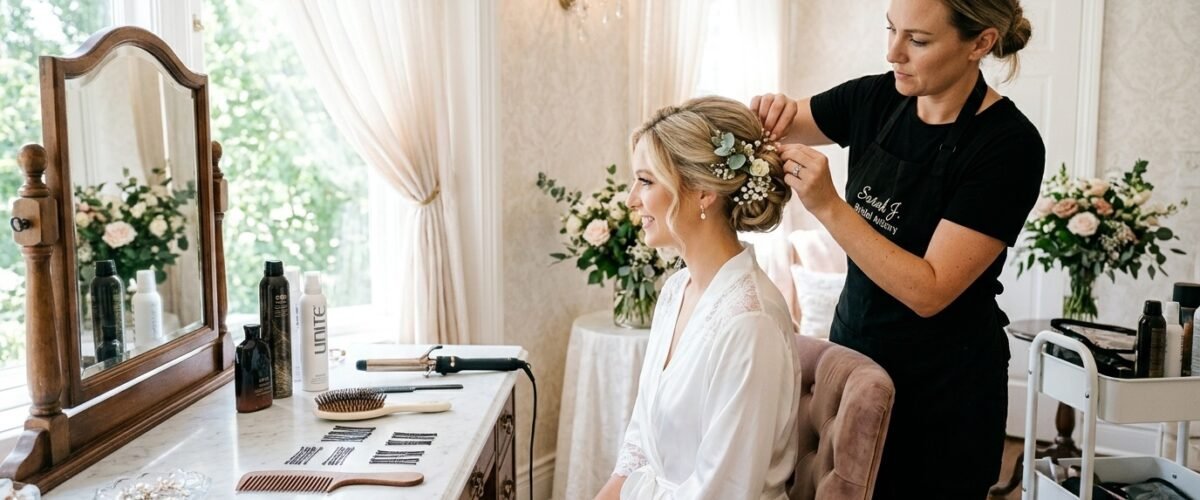
Hiring a skilled wedding hair stylist costs between $150 and $450 for the bride and $85 to $150 per attendant. In fact, booking your bridal hair pro six to nine months in advance protects your wedding morning flow. Many brides wait too long and face booked calendars or steep rush fees. However, booking early guarantees your trial date and secures your morning prep block. In contrast, an early contract locks in current pricing and secures your artist.
I have guided hundreds of couples through wedding plans over fourteen years as a lead wedding planner. In fact, wedding morning delays happen most often in the styling chair. When you hire the right wedding hair stylist, your morning runs like clockwork. You can pair your beauty day plan with our wedding vendor checklist to keep your hiring organized. This useful guide covers pricing benchmarks, trial run checklists, contract red flags, and day-of buffer rules.
Master Hair Stylist Pricing and Service Matrix
First, review typical styling rates before requesting quotes. Knowing market rates helps you budget accurately and spot hidden fees.
Bridal Hair Service Breakdown and Cost Estimates Table
| Service Type. | Average Cost Range. | Time Needed. | Buffer Window. | Lead Planner Advice. |
|---|---|---|---|---|
| Bride Hair Preview Trial. | $100 to $250. | 90 to 120 min. | 15 min. | Schedule on the same day as your dress fitting or shower. |
| Bride Wedding Day Style. | $150 to $450. | 75 to 90 min. | 15 min. | Wear a button-down shirt so you do not ruin styled curls. |
| Bridesmaid Hair Style. | $85 to $150. | 40 to 45 min. | 10 min. | Have attendants arrive with completely dry, clean hair. |
| Mother of the Bride Hair. | $80 to $140. | 35 to 45 min. | 10 min. | Short blowouts take less time than complex pin curls. |
| Flower Girl Hair Styling. | $40 to $75. | 20 to 30 min. | 5 min. | Keep styles simple with loose waves or sweet ribbon braids. |
| Clip-In Extension Prep. | $35 to $75. | 20 to 30 min. | 5 min. | Wash and color-match extensions two weeks before wedding day. |
knowing Travel Fees, Minimum Headcounts, and Assistant Rates
First, ask about travel fees and mileage rates. Most artists charge travel fees for locations outside their home radius. In fact, travel rates usually run between one dollar and two dollars per mile round-trip. In addition, city weddings often require hotel parking fees. Clarify parking costs before signing your deal.
Next, check if your artist enforces a minimum service headcount. Peak Saturday dates often require a minimum of four or five adult hair services. If your bridal party is small, you may need to cover the minimum booking fee. In fact, knowing headcount rules early protects your budget from surprise charges.
Finally, ask when an assistant stylist is required. A single artist can comfortably style five or six people in five hours. If you have eight or more attendants, hire a second stylist. In fact, an assistant costs between one hundred and fifty and two hundred and fifty dollars. An extra stylist cuts morning prep time in half.
Related: Bridal Party Hair and Makeup: Schedule, Pricing, and Etiquette Guide
Wedding Hair Stylist Booking day plan and Trial Run Schedule
Securing your wedding hair stylist follows a proven day plan. Follow these steps to book your ideal artist and test your bridal look.
Months 9 to 6: Portfolio Audits and Inquiring with Local Artists
First, begin your artist search nine months before your wedding date. Review bridal portfolios on Instagram and local wedding lists. Look for photos of real brides with hair textures similar to your own. In addition, check client reviews for punctuality and professionalism.
Next, send booking inquiries to your top three favorite stylists. In your email, list your vows date, getting-ready venue address, and estimated party size. In fact, popular artists book up to a year in advance for spring and fall weekends. Quick inquiries help you secure your preferred date.
Finally, review contract proposals and pay the retainer. Standard retainers range from twenty-five to fifty percent of the total service package. You can review our how to plan a wedding checklist to keep all vendor bookings aligned. In short, early down payments lock your artist on your calendar.
Months 4 to 3: Scheduling and Prepping for the Bridal Trial
First, schedule your hair trial three to four months before wedding day. By this point, you have chosen your dress neckline, veil, and bridal earrings. In fact, your dress neckline dictates whether an updo or down-style works best.
Next, collect five to eight inspiration photos on Pinterest. Look for styles that show front, side, and back angles clearly. In addition, be honest about your natural hair length and thickness. If you want a voluminous bun, purchase clip-in hair extensions before the trial.
Finally, wear a white or ivory top with a neckline similar to your gown. Seeing your hair against white fabric gives you an accurate view of your wedding look. In short, dressing up for your trial helps you review the total aesthetic.
The 3-Month Trial Run Execution and Photo Documentation
First, arrive at your trial appointment with clean, completely dry hair. Wash your hair the evening before with a clarifying shampoo. Avoid heavy hair oils or leave-in serums that weigh down curls. In fact, day-old hair holds curls better than freshly washed strands.
Next, test two distinct looks during your trial session. Try a romantic textured updo and a half-up glam wave style. Take photos in natural daylight and under warm indoor lighting. In addition, test how your veil attaches and feels on your scalp. In fact, checking veil weight prevents tension headaches on wedding day.
Finally, wear the style for the rest of the day to test its hold. Check if curls drop or if hairpins poke into your neck. Send feedback to your stylist within forty-eight hours with any requested adjustments. In short, real-world wear testing makes sure total comfort on wedding day.
The 10 Essential Questions to Ask Before Signing a Contract
Hiring a wedding hair stylist requires careful vetting. In fact, ask these key questions to protect your budget and make sure a smooth morning skill.
Evaluating Day-Of Team Size and Multiple Stylist Thresholds
First, ask who will personally style your hair on wedding day. make sure your contract names your exact lead artist rather than a random agency contractor. In fact, booking an exact artist guarantees the exact style you practiced at your trial.
Next, ask how many min the stylist allocates per attendant. Standard timing is forty-five min for bridesmaids and ninety min for the bride. In addition, ask if the stylist brings an assistant for large groups. Knowing team size helps you build a realistic getting-ready schedule.
Finally, ask what happens if an attendant changes their mind and skips hair styling. Most contracts hold you financially responsible for the agreed headcount. In short, clarifying headcount policies prevents awkward money disputes with friends.
Contract Red Flags: Force Majeure, Replacement Stylists, and Rescheduling
First, read the emergency replacement policy carefully. If your lead artist falls ill on wedding morning, the contract must guarantee an equivalent replacement artist. You can check the Association of Bridal Consultants for standard beauty vendor terms.
Next, inspect the force majeure and weather cancellation clauses. Outdoor weddings face occasional hurricanes, blizzards, or power cuts. In fact, your contract should state how rescheduling works if severe weather closes roads. Clear weather rules give you peace of mind.
Finally, look for clauses regarding salon equipment and power limits. Stylists need multiple grounded electrical outlets for curling irons and blow dryers. Sharing outlet needs with your venue planner prevents blown electrical fuses. In short, technical contract terms protect your morning day plan.
Retainers, Cancellation Policies, and Final due Due Dates
First, check when the final due payment is due. Reputable artists request final dues two weeks before the wedding or on wedding morning. Avoid paying full fees months in advance before trials take place.
Next, ask what forms of payment the artist accepts. Many artists take credit cards or bank transfers for retainers, but prefer cash for day-of dues. In addition, check whether gratuity is included in the invoice or paid separately. Knowing payment rules stops awkward morning runs to the bank.
Finally, review the cancellation refund schedule. If you cancel four months early, you usually forfeit your retainer but owe no further dues. In short, knowing the refund terms protects your financial investment.
Preparing Your Hair for the Big Day: The 30-Day Prep Checklist
Healthy hair is the secret to a gorgeous wedding style. Follow this monthly routine to get your hair shiny, strong, and ready for styling.
Trims, Color Appointments, and Deep Conditioning Schedules
First, schedule your final hair trim two weeks before the wedding. Ask your colorist to refresh your balayage or highlights at this same visit. In fact, getting color done two weeks early allows shades to settle naturally.
Next, apply a weekly deep conditioning hair mask during the final month. Hydrated hair holds curls longer and looks radiant in natural light. However, skip heavy conditioning treatments within seventy-two hours of the wedding. Excess moisture can make hair too slippery for updos.
Finally, avoid dramatic haircut changes right before your wedding. Do not try a new fringe or cut off several inches of length. Keep your length consistent with what you practiced at your bridal trial. In short, sticking to your proven cut prevents bridal panic.
The Night-Before Wash and Blow-Dry Protocol
First, wash your hair the evening before the wedding rather than morning-of. Use a lightweight clarifying shampoo to remove product buildup and oils. In addition, apply conditioner only to the bottom two inches of your ends.
Next, blow-dry your hair completely smooth with a round brush. Never go to sleep with damp hair, as damp strands form strange creases overnight. In fact, stylists charge added blow-dry fees if attendants arrive with wet hair on wedding morning.
Finally, sleep on a smooth satin or silk pillowcase the night before. Satin pillowcases reduce morning frizz and protect delicate strands from friction. In short, proper night-before prep saves valuable styling min in the morning.
Morning-Of Wardrobe: Button-Down Shirts and Satin Robes
First, wear a button-down shirt or zip-up robe while getting styled. Never wear a tight crewneck t-shirt or pullover sweater. In fact, pulling a tight shirt over your head will ruin hours of styling work.
Next, remind all bridesmaids and mothers to dress in button-front shirts as well. Coordinated bridal robes look wonderful in morning getting-ready photos. In addition, button-up robes make changing into dresses quick and easy.
Finally, set out your hair accessories, veil, and earrings on a clean table. Having accessories ready allows your stylist to pin hair vines and combs without delay. In short, good morning organization keeps stylists focused on their work.
Wedding Morning Hair Schedule and Buffer Formulas
Your wedding hair stylist needs a calm prep environment. In fact, sticking to proven buffer rules keeps your morning schedule relaxed and joyful.
Calculating Exact min: 45 min per Attendant, 90 for the Bride
First, use pro timing formulas to build your morning schedule. Allocate forty-five min for each bridesmaid and sixty min for the mother of the bride. In addition, give your lead artist ninety full min for the bride.
Next, determine who gets styled first in the rotation. Schedule bridesmaids who take photos early or need to run errands first. In fact, the bride should always be styled second-to-last in the lineup. Styling the bride near the end keeps her hair fresh for portraits.
Finally, schedule touch-ups for all attendants fifteen min before dressing. The stylist will spray flyaways, adjust pins, and refresh lip color. You can sync this window with our wedding schedule template. In short, structured rotations keep the morning orderly.
The Mandatory 45-Minute Morning Buffer Window
First, add a mandatory forty-five-minute buffer window at the end of styling. Hair and makeup delays are the primary reason wedding vows start late. In fact, curling thick hair and adjusting updos often takes longer than expected.
Next, treat this buffer window as your personal secret weapon. If styling runs thirty min late, you absorb the delay without panic. In addition, if hair finishes on time, you gain forty-five min to relax, drink champagne, and snack with friends.
Finally, instruct your photographer to arrive at the start of this buffer window. Arriving when hair finishes allows the photographer to capture gorgeous, unstressed getting-ready portraits. In short, buffer windows protect your peace of mind.
Extension Placement, Veil Pinning, and Crown Attachment Timing
First, budget twenty min for clipping in and blending hair extensions. Your artist will tease small root sections and spray grip powder to anchor clips securely. In fact, proper extension prep prevents clips from slipping during energetic dancing.
Next, have your artist pin your bridal veil into place right before you step into your dress. Ask the artist to show your maid of honor how to remove the veil comb safely. In fact, removing a veil without pulling out hairpins requires an exact rolling technique.
Finally, secure hair vines and floral combs with criss-crossed bobby pins. Place pins through hair accessory loops so metal wire cannot slide loose. In short, sturdy pin placement keeps accessories secure through the entire party.
Touch-Up Kits, Weather Safeguards, and Day-Of Longevity
Your hair must look pristine from morning first looks to midnight send-offs. Packing the right tools protects your style against all weather conditions.
High-Humidity, Wind, and Rain Proofing Formulas
First, discuss weather contingency plans with your stylist at your trial. If you are having a summer wedding, high humidity causes loose curls to drop. In fact, choosing a textured updo or sleek low bun is the safest option for humid coastal venues.
Next, use pro anti-humidity finishing sprays. Strong-hold hairsprays seal the hair cuticle against outdoor moisture and drizzle. In addition, outdoor mountain or beach vows require extra hairpins to combat gusty winds. Sturdy pins keep your veil from flying away.
Finally, pack two clear bubble umbrellas in your bridal emergency kit. Bubble umbrellas protect your hair and veil while walking from the bridal suite to the vows. In short, proactive rain prep keeps your bridal hair pristine.
Bridal Suite Touch-Up Kits: Texture Spray, Bobby Pins, and Combs
First, assemble a set hair touch-up kit for your party bag. Pack a travel-sized can of hairspray, dry texture spray, and thirty matching bobby pins. You can reference our bridal book checklist to build your complete wedding tote.
Next, include a small rat-tail comb to smooth flyaway hairs and redefine your part. In addition, pack a mini travel hair oil to tame dry ends before evening portraits. In fact, a quick two-minute touch-up before your grand entrance refreshes your bridal glow.
Finally, hand the touch-up kit to your maid of honor or personal attendant. Instruct them to carry the kit to the party venue and place it near your sweetheart table. In short, having tools handy stops minor hair mishaps quickly.
Veil Removal Protocols: Preserving Your Curls for the party
First, plan to remove your veil immediately after the post-vows photo session. Wearing a long cathedral veil during dinner makes dancing and hugging guests difficult. In fact, guests can accidentally pull on your veil when embracing you.
Next, ask your maid of honor to remove the veil comb slowly. She should place one hand firmly on the base of your updo while sliding the comb up and out. In fact, supporting the hair base prevents the comb from pulling out your styled curls.
Finally, add a decorative hair comb or crystal pins over the spot where the veil was removed. Adding a sparkling accessory gives you a fresh, glamorous evening look for dancing. In short, smooth veil removal transitions your look effortlessly.
Tipping Etiquette and Day-Of Cash Distribution
Tipping your wedding hair stylist is standard wedding etiquette. In fact, following clear tipping formulas avoids confusion on wedding morning.
Standard Gratuity Rates: Calculating 15% to 20%
First, calculate standard tips based on fifteen to twenty percent of the total service bill. For example, on an eight-hundred-dollar styling bill, an appropriate tip runs between one hundred and twenty and one hundred and sixty dollars. In fact, generous tips reward artists who travel early and manage time well.
Next, check your contract to confirm whether gratuity was already added automatically. Some bridal hair agencies include an eighteen percent service gratuity in the initial invoice. If gratuity is already included, you do not need to tip extra cash on wedding morning.
Finally, tip assistant stylists separately if they worked on your party. Budget twenty to forty dollars per assistant for their hard work. In short, checking your invoice prevents double tipping.
Preparing Cash Envelopes for Lead Stylists and Assistants
First, prepare cash tip envelopes during wedding week. Place clean bills inside small envelopes labeled with each stylist’s name. In addition, write a brief thank-you note on the front of each envelope.
Next, store prepared envelopes in the front pocket of your bridal planning binder. Keeping cash envelopes organized prevents frantic searches on wedding morning. In fact, having exact cash ready avoids awkward requests for change.
Finally, prepare an extra twenty-dollar bill in case the stylist handles an unplanned touch-up. Small extra tips show gracious hospitality to hard-working wedding pros. In short, pre-made envelopes keep mornings orderly.
Assigning Tip drop-off to Your Wedding planner or Maid of Honor
First, designate a trusted person to hand out tip envelopes on wedding day. Hand the envelopes to your wedding planner or maid of honor at the rehearsal dinner. In fact, handing off this task frees you from thinking about money while getting styled.
Next, instruct your helper to give the tip envelopes right after styling finishes. Stylists pack up their kits quickly to head to their next appointment. giving tips before they leave makes sure all staff gets compensated on time.
Finally, thank your stylist personally before they pack up their gear. A sincere thank-you leaves your team feeling valued and proud of their work. In short, prompt payments build wonderful vendor relationships.
Hiring a skilled wedding hair stylist makes sure your wedding morning runs on time and your bridal curls last all day. In fact, by booking early, scheduling a thorough trial run, and respecting buffer formulas, you eliminate morning stress. Step into your wedding day with total confidence, and enjoy every moment of getting ready with your closest friends and family.
Editorial Note: This article has been researched, written, and fact-checked by our experienced wedding planning team. Every guide is manually reviewed by our lead author to ensure accurate and reliable advice.
Frequently Asked Questions
Hover or tap any question below to reveal the answer.
How far in advance should you hire a wedding hair stylist?
In fact, popular stylists book prime spring and fall Saturday dates up to a year in advance.
Should you wash your hair on the morning of your wedding?
In fact, day-old hair has natural grip that holds curls and updos much longer than freshly washed hair.
How long does hair styling take on wedding morning?
In addition, add a mandatory forty-five-minute buffer window to absorb unexpected styling delays.
What should you bring to your bridal hair trial?
In addition, wear a white shirt with a neckline similar to your wedding gown.
How much should you tip your wedding hair stylist?
In fact, check your contract first to make sure gratuity was not already added to your final invoice.
Do you have to pay for your bridesmaids’ hair styling?
However, if styling is optional, attendants typically cover their own styling fees.