
Learning how to plan a wedding requires a clear twelve-month day plan divided into distinct quarterly goals. In fact, tackling decisions in structured phases prevents decision fatigue and protects your budget. Couples spend three hundred hours planning. In fact, many couples feel overwhelmed by early choices. However, trying to book vendors out of order leads to costly mistakes. In contrast, an orderly roadmap helps you. In fact, you lock in your dream venue and dream team without stress.
I have guided hundreds of couples through wedding plans over fourteen years as a lead wedding planner. In fact, wedding day mistakes happen when couples skip essential buffer windows. Know how to plan a wedding step by step. In fact, doing so keeps you in total control of your funds. You can start by reviewing our guide on how to make a wedding budget to establish your spending limits. This full guide gives a complete month-by-month checklist, booking due dates, payment rules, and day-of execution strategies.
Master 12-Month Wedding Planning date Matrix
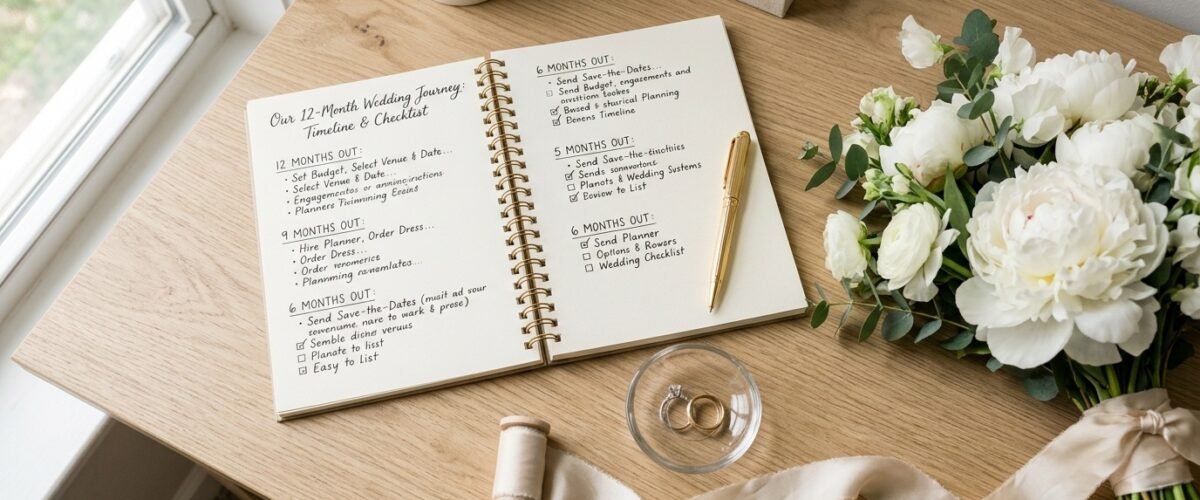
First, review the full twelve-month planning matrix before contacting venues. A clear visual schedule keeps both partners aligned on upcoming priorities.
The Complete Month-by-Month Wedding Checklist Table
| Planning Window. | Core Focus Area. | Key dates to Complete. | Budget Allocation. | Lead planner Advice. |
|---|---|---|---|---|
| Months 12 to 10. | Vision and Venue. | Draft guest count, set budget, tour and book venue. | 45% to 50% of budget. | Lock your venue date before shopping for dresses or suits. |
| Months 9 to 8. | Core Vendor Team. | Hire photographer, videographer, food team, and band or DJ. | 20% to 25% of budget. | Book high-demand photographers early because calendars fill fast. |
| Months 7 to 6. | Attire and Guests. | Order wedding gown, launch wedding website, mail save-the-dates. | 8% to 10% of budget. | Wedding dresses require six to nine months for production. |
| Months 5 to 4. | Design and Rentals. | Book florist, reserve tables and linens, order invitations. | 8% to 10% of budget. | Schedule an in-person floral mockup to see centerpieces. |
| Months 3 to 2. | Food and Stationers. | Conduct menu tasting, mail invitations, start gown alterations. | 5% to 8% of budget. | Set RSVP due dates exactly four weeks before the big day. |
| Month 1. | Final plans. | Finalize seating charts, confirm headcount, pay final dues. | Remaining dues. | Walk through the floor plan with the venue banquet lead. |
knowing Critical Path due dates and Booking Order
First, know why booking order matters so much. Venues, photographers, and planners can only work one wedding per date. In fact, prime fall and spring dates book twelve to eighteen months in advance. Book your venue first. In fact, securing your venue locks in your date and location.
Next, never book secondary vendors before confirming your venue. Your venue contract dictates your food options, sound curfews, and decor limits. In fact, some historic venues restrict open flames and outside alcohol. Knowing venue rules early protects you from non-refundable vendor down payments.
Finally, set up a set wedding email address and shared sheet folder. Use this inbox exclusively for vendor contacts and price quotes. In short, keeping all wedding paperwork in one online hub prevents lost contracts.
Related: How Long Does It Take for Wedding Dress Alterations: Complete 2026 Timeline and Fitting Schedule
How to Plan a Wedding from Scratch: Months 12 to 9
Mastering how to plan a wedding starts with establishing your budget and booking your core venue. Setting these two pillars gives you total clarity for all future decisions.
Setting a Realistic Total Budget and Guest List Caps
First, determine your total wedding budget before touring venues. Sit down with your partner and any contributing family members. In fact, establish who is paying for exact wedding items. Talk about funds openly. In fact, having an honest money talk early prevents painful mix-ups later.
Next, build a preliminary guest list using our wedding guest list template. Your guest count is the single biggest factor driving wedding costs. Every guest adds cost. In fact, each guest adds bills for food, drinks, chairs, and cake. In fact, capping your guest list at one hundred guests keeps budgets manageable.
Finally, allocate five percent of your total funds to an emergency buffer fund. Extra costs always pop up. For example, dress fittings, marriage licenses, and cash tips add up fast. In short, having a cash reserve keeps your planning completely stress-free.
Touring Venues and Locking In Your Wedding Date
First, schedule in-person tours at three to five candidate venues. You can read our detailed guide on wedding venue planning for a complete checklist of questions to ask. Check vows spaces, cocktail areas, and party halls during your visits.
Next, review venue contracts with extreme care. Check venue load-in hours, sound restrictions, and mandatory preferred vendor lists. In addition, ask whether the venue hosts multiple weddings on the same calendar day. Private venues host one event per day. In fact, single-event venues provide a much calmer setting for your guests.
Finally, sign your venue deal and pay the initial reservation down payment. Typical venue down payments range from twenty-five to fifty percent of the total rental fee. In short, paying your venue down payment officially secures your wedding date.
Hiring High-Priority Vendors Before calendars Fill Up
First, hire your lead wedding planner or month-of planner immediately after booking your venue. pro planners keep your budget intact and review vendor contracts for red flags. You can check our wedding vendor checklist to track every hiring step.
Next, book your lead photographer and videographer. photo packages represent twelve to fifteen percent of standard wedding budgets. Review full wedding galleries rather than curated social media highlight reels. In fact, seeing how a photographer handles low-light indoor parties reveals their true technical skill.
Finally, secure your food team and bar service team. If your venue does not include in-house food, book a reputable outside food team eight to ten months out. Schedule an initial menu consultation to establish catering styles and staffing ratios. In short, locking in your food pro guarantees great meals for your guests.
Phase 2: Months 8 to 6 : Design, Attire, and Guest control
During the middle planning phase, your wedding design and wardrobe come to life. Focusing on fashion, decor, and guest contact keeps your progress steady.
Ordering Wedding Gowns, Suits, and Wedding Party Attire
First, begin shopping for bridal attire eight to nine months before your wedding. Made-to-order designer wedding dresses take six to nine months for drop-off. Gowns take six to nine months to ship. Then, plan eight to twelve weeks for dress fittings.
Next, select wedding party attire and color palettes. Pick bridesmaid dress styles and assign suit rentals for groomsmen. Order bridal party dresses six months out. In fact, early orders allow plenty of time for shipping and local alterations. Early orders prevent rush drop-off charges.
Finally, schedule tuxedo and suit fittings for groomsmen two months before the wedding. make sure all staff tries on their complete suit forty-eight hours before the vows. In short, early garment fittings avoid wardrobe emergencies on wedding morning.
Building Your Wedding Website and Sending Save-the-Dates
First, build a customized wedding website on platforms like Zola or The Knot. Include your vows time, party address, travel directions, and hotel room blocks. In addition, add your gift gift list links so guests can shop early.
Next, mail paper save-the-date cards six to eight months before local weddings. Mail save-the-dates six months early. In fact, mail them eight to twelve months out for destination events. In fact, early notice gives out-of-town guests time to book flights and request vacation days.
Finally, collect and check guest mailing addresses in a shared online sheet. Collect mailing addresses in a shared sheet. In fact, check street numbers and zip codes with family early. In short, accurate address lists make invitation addressing effortless.
Selecting Florals, Linens, Rentals, and Lighting Concepts
First, hire a skilled wedding florist seven months before your wedding date. Share your color palette, favorite blooms, and Pinterest mood boards. You can consult the Association of Bridal Consultants for standard floral budgeting formulas.
Next, select rental furniture, specialty linens, and place settings. Choose chair styles that complement your venue design, such as wooden cross-back or classic Chiavari chairs. In fact, upgraded table linens instantly boost the visual impact of your dining room.
Finally, design your lighting scheme with your venue or entertainment company. Ambient uplighting, string lights, and pin-spot table lighting create a warm, inviting atmosphere. In short, thoughtful lighting transforms ballroom spaces once the sun sets.
Phase 3: Months 5 to 3 : Invitations, Menus, and Entertainment
With major design choices locked in, focus shifts to guest hospitality and big day details. Ordering stationery and planning delicious food creates a memorable guest skill.
Finalizing Food Menus and Bar Service Packages
First, attend your formal food tasting five months before the wedding. Taste entree options, salad courses, and passed hors d’oeuvres. Select two meat picks and one plant plate. In fact, offering clear meal options satisfies all your guests.
Next, determine your bar service package and beverage budget. Standard weddings require one alcoholic beverage per guest per hour of party time. Budget one drink per guest each hour. For example, budget five hundred drinks for one hundred guests over five hours. Staff one bartender for every fifty guests to keep drink lines moving quickly.
Finally, book your wedding cake baker and dessert food team. Order a multi-tier wedding cake or an interactive dessert station with donuts and macarons. In short, scheduling tastings early guarantees sweet treats your guests will love.
Addressing, Assembling, and Mailing Formal Invitations
First, order your complete wedding invitation suite four to five months before the wedding. You can check our guide on what to include in wedding invitation to make sure you include every vital card. Order response cards, party cards, and pre-addressed return envelopes.
Next, take one fully assembled invitation to the post office to weigh it. Formal wedding invitations with heavy cardstock and wax seals often require extra postage stamps. Weigh one full invite at the post office. In fact, guessing postage rates leads to returned cards and late mail.
Finally, mail your formal invitations eight to ten weeks before your wedding date. Set your RSVP due date exactly four weeks before the vows. In short, an eight-week mailing window gives guests ample time to respond.
Planning vows Music, party Playlists, and Special Dances
First, select your vows processional and recessional music. Choose romantic instrumental tracks or acoustic covers for the wedding party entrance. Pick romantic instrumental tracks for the entrance. In addition, choose a special bridal entrance song.
Next, meet with your DJ or band leader to outline party music. Select songs for your grand entrance, first dance, parent dances, and cake cutting. Review party music with your DJ. In addition, compile a strict do-not-play list to prevent unwanted tracks.
Finally, map out your speech schedule and toast order. Limit toasts to three speakers, such as the maid of honor, best man, and parents. In fact, capping speeches at three min each keeps dinner service moving on schedule.
Phase 4: Months 2 to 1 : Final Counts, Floor Plans, and Fitting Runs
The sixty-day mark is when planning details crystallize into concrete plans. Managing final headcounts and seating charts makes sure smooth execution.
Tracking RSVPs and Finalizing Seating Charts
First, log every RSVP into your master guest tracking sheet. Call or text guests who fail to respond by the designated RSVP due date. In fact, food teams require guaranteed final headcounts two to three weeks before the event.
Next, build your table seating chart based on confirmed attendee counts. Group guests by family branches, college friends, or coworker circles. In addition, assign table numbers and note any severe food allergies on your food chart.
Finally, order printed place cards, escort display boards, and table number signs. Double-check the spelling of every guest name before sending files to print. In short, clear seating signs guide guests to their dining tables without confusion.
Completing Final Dress Alterations and Suit Pickups
First, attend your final wedding dress fitting four to six weeks before the wedding. Attend your final dress fitting four weeks out. In fact, bring your wedding shoes and bridal shapewear. In fact, shoe heel height straight determines the hem length of your gown.
Next, practice bustling your wedding dress with your maid of honor. Practice bustling your gown with your maid of honor. Next, record a video of each button hook. In fact, video instructions help your bridal party fasten your train quickly after the vows.
Finally, pick up all groomsmen suits and tuxedos the week of the wedding. Have each attendant try on their complete outfit immediately. In short, early try-ons allow time to swap incorrect jacket sizes or trouser lengths.
Hosting the 30-Day Vendor Alignment Walk-Through
First, conduct a thirty-day walk-through at the venue with your planner and food team. Tour the venue thirty days out. In fact, review layouts for the aisle, bars, and dining tables. In addition, confirm venue access hours and loading dock schedules.
Next, distribute your draft wedding day day plan to all hired vendors. You can reference our wedding schedule template to structure every fifteen-minute block. Ask vendors to confirm arrival times and staffing numbers.
Finally, collect updated insurance forms from all vendors. make sure each vendor policy lists the venue as an extra insured party. In short, completing insurance checks thirty days out prevents venue access delays.
The Final 30 Days: Wedding Week plans and Rehearsal Direction
Wedding month requires sharp organizational discipline. Taking care of administrative errands early leaves you calm and refreshed for your big day.
Assembling Cash Gratuity Envelopes and Final Payments
First, prepare final vendor due checks two weeks before the wedding. Most vendor contracts require full payment ten to thirty days before the event date. In fact, mailing final payments early prevents billing stress on your wedding morning.
Next, prepare labeled cash tip envelopes for service staff. Budget fifty to one hundred dollars for lead food captains and DJ leads. In addition, prepare twenty-dollar cash tips for drop-off drivers and setup crews.
Finally, hand your prepared tipping envelopes to your lead planner or best man. Instruct them to distribute tips at the end of the party. In short, delegating tip drop-off frees you to enjoy your party.
Packing Day-Of Emergency Kits and Decor Bins
First, assemble a bridal emergency kit filled with personal care essentials. Pack safety pins and fashion tape in your kit. Also, add stain wipes and blister bandages. In fact, having an emergency kit on hand solves minor wardrobe hiccups in seconds.
Next, pack your wedding decor into clear plastic storage tubs. Label each tub with its assigned venue location, such as Welcome Table, Bar, or Guest Book Table. In addition, include a printed inventory list inside each tub.
Finally, assign a trusted friend or family member to transport decor tubs to the venue. In short, organized packing boxes make morning venue setup effortless.
Conducting the vows Rehearsal and Processional Walk
First, gather your wedding party and immediate family for the vows rehearsal. Schedule the rehearsal for the afternoon before the wedding. Gather your wedding party for the rehearsal. In fact, walk through the aisle steps and standing spots twice.
Next, review microphone etiquette and reading cues with your officiant and readers. Remind speakers to hold microphones close and project their voices clearly. In fact, a thirty-minute rehearsal gives all staff confidence for the real vows.
Finally, host a relaxed rehearsal dinner to thank your bridal party. Keep speeches short and encourage all staff to get a good night of sleep. In short, an early bedtime makes sure all staff wakes up rested and excited.
Day-Of Execution: Running Your Wedding on Schedule
Wedding day has arrived! Trusting your vendors and sticking to your scheduled buffer rules guarantees a joyful, punctual big day.
Managing Hair and Makeup Timing with Buffer Windows
First, begin hair and makeup styling early in the morning. Budget forty-five min per bridesmaid for styling. In addition, allocate ninety full min for the bride hair and makeup service.
Next, insert a mandatory forty-five-minute buffer window at the end of hair and makeup. Hair and makeup delays are the number one cause of late weddings. Insert a forty-five-min buffer after hair styling. In fact, this buffer absorbs delays without cutting into photo time.
Finally, have the bridal party dress thirty min before the photographer arrives. Getting dressed early allows the photographer to capture beautiful getting-ready photos without feeling rushed.
Coordinating First Look Portraits and Cocktail Hour Transition
First, schedule your first look and couple portraits two hours before the vows. Taking photos before the vows keeps hair and makeup completely fresh. Take couple portraits before the vows. In addition, finishing photos early lets you attend cocktail hour.
Next, gather immediate family for formal group portraits forty-five min before guest arrival. Gather family for portraits before guest arrival. In fact, limit family photos to ten groupings to save time. In fact, efficient family photos keep all staff smiling and relaxed.
Finally, hide the couple away in the dressing suite thirty min before vows start. Take this quiet window to drink water and relax with your partner before walking down the aisle.
party day plan Flow: Grand Entrance to Final Send-Off
First, kick off your party with a high-energy grand entrance. Transition straight into your first dance while guest excitement is at its peak. In fact, doing your first dance immediately engages the crowd.
Next, serve dinner promptly to keep guests happy. Serve dinner promptly to keep guests happy. In fact, plated meals take sixty min, while buffets take forty-five min. Coordinate with your food captain so dinner courses flow without long pauses.
Finally, open the dance floor and conclude with a grand exit. Open the dance floor after dinner. Then, schedule your grand send-off thirty min before venue curfew. In short, ending on time prevents costly venue added hours charges.
Common Wedding Planning Mistakes Most Couples Make
Even organized couples encounter unexpected pitfalls. Steering clear of these three common mistakes protects your budget and peace of mind.
Overbooking the Morning Schedule Without Adequate Buffers
First, never build a rigid minute-by-minute morning schedule without buffer time. Avoid rigid morning schedules without buffers. In fact, hair styling and zipper fixes always take extra time. A tight schedule causes panic. In contrast, built-in padding windows keep your day calm and smooth.
Next, add fifteen-minute padding windows between every major transition. Give yourself extra time between dressing and first look photos. In short, built-in buffer windows keep your entire day relaxed and on time.
Finally, trust your wedding planner to manage the clock. Relax and focus on celebrating with your partner and family members.
Forgetting Vendor Meal Obligations and added hours Fees
First, review your vendor contracts for mandatory vendor meal clauses. photographers, videographers, planners, and DJs working six or more hours require hot meals. In fact, failing to order vendor meals violates contract terms and delays vendor energy.
Next, note vendor added hours billing rates in your planning summary. Check vendor added hours fees in your contracts. In fact, pros charge up to five hundred dollars per hour for added hours. In addition, venues charge steep penalty fees if music plays past curfew.
Finally, make sure your party schedule wraps up thirty min before contract end times. In short, punctual endings protect your wallet from added hours bills.
Failing to Establish an Emergency Bad-Weather Rain Plan
First, always create a solid bad-weather backup plan for outdoor vows. Always create a solid rain plan for outdoor vows. In fact, tented events require firm bad-weather rules. In fact, renting a rain backup tent forty-eight hours out gives you total weather security.
Next, establish a firm weather call due date with your venue and florist. Set a firm weather call due date with your venue. In fact, venues require rain decisions three hours before vows. In short, having a backup plan prevents panicked last-minute decisions.
Finally, embrace whatever weather arrives on your wedding day. In fact, rainy wedding photos can be breathtakingly romantic with clear bubble umbrellas.
Knowing how to plan a wedding transforms a complex twelve-month journey into an organized, joyful skill. In fact, by establishing your budget early, locking in trusted vendors, and respecting buffer windows, you eliminate stress. Step into your wedding day with total confidence, and savor every moment of your big day with family and friends.
Editorial Note: This article has been researched, written, and fact-checked by our experienced wedding planning team. Every guide is manually reviewed by our lead author to ensure accurate and reliable advice.
Frequently Asked Questions
Hover or tap any question below to reveal the answer.
How far in advance should you start planning a wedding?
In fact, starting early makes sure you book high-demand venues and popular photographers before their calendars fill.
What are the first three things to do when planning a wedding?
Second, build a preliminary guest list. Third, tour and book your dream wedding venue to lock in your official date.
What is the most costly part of a wedding?
In fact, food and venue fees account for roughly half of all wedding spending.
Do you really need a wedding planner?
In fact, planners manage day-of vendor arrivals, day plan flow, and unexpected emergencies so you can enjoy your day.
How do you know how to plan a wedding on a tight budget?
In short, guest count control is the best way to save money.
When should you send out wedding invitations?
In addition, set your RSVP due date four weeks before the vows to give food teams accurate counts.