

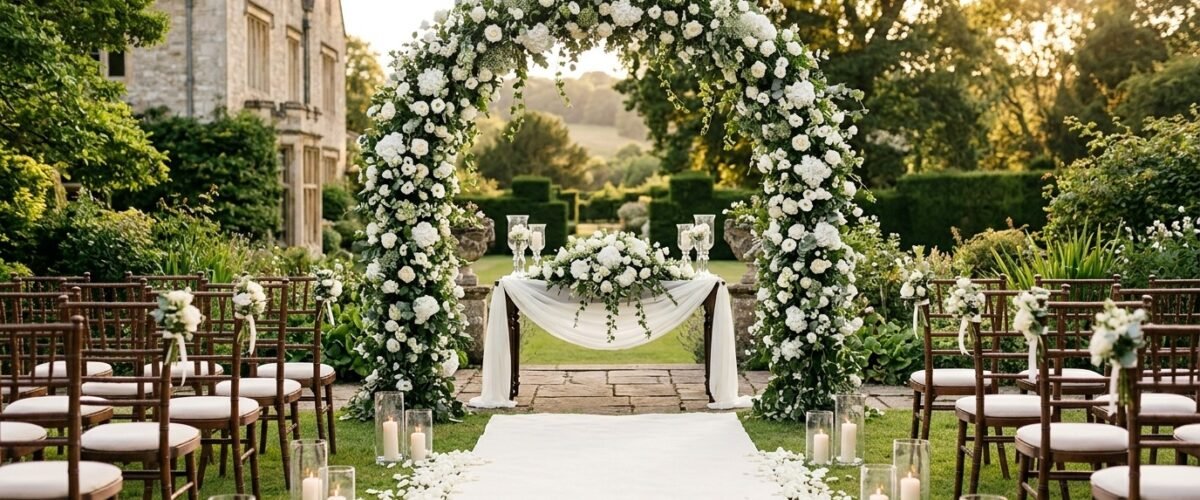
A standard wedding marriage ceremony lasts twenty-five to thirty-nine minutes from processional entrance to the celebratory recessional kiss. Without disciplined pacing and aisle spacing benchmarks, processional walks bunch together and sound delays cascade into cocktail hour. Structuring each ceremonial segment with intentional time buffers protects your schedule while honoring the emotional significance of your vows.
As a lead wedding coordinator with fourteen years directing ceremonies in historic chapels, outdoor gardens, and private estates, I see couples overlook production realities every weekend. Specifically, couples forget that fifty guests take ten minutes to find seats, and attendants walk too quickly down the aisle. This authoritative guide provides an exact order of service, spacing formulas, audio requirements, and legal signing protocols for your wedding day.
Wedding Marriage Ceremony: Master Order of Service Schedule
Every ceremonial element serves a practical liturgical or social purpose. Standardizing your order of events ensures guests remain engaged from opening prelude to the final kiss.
| Order Segment | Standard Duration | Musical Accompaniment | Coordinator Cue & Staging |
|---|---|---|---|
| Guest Prelude Seating | 20 to 30 minutes | Classical strings or ambient acoustic | Ushers seat guests; doors remain open |
| Seating of Family | 3 to 5 minutes | Dedicated soft maternal processional | Grandparents and mothers seated |
| Officiant & Groom Entry | 1 to 2 minutes | Subtle transition chords | Enter from sanctuary side door to altar |
| Bridal Party Processional | 3 to 4 minutes | Instrumental bridal party anthem | Attendants spaced by 4 pew lengths |
| Bridal Grand Entrance | 2 to 3 minutes | Processional music change; flourish | Doors close; guests stand on cue |
| Welcome & Opening Remarks | 3 to 5 minutes | Silence | Officiant invites guests to be seated |
| Readings or Unity Ritual | 3 to 5 minutes | Optional light acoustic backdrop | Reader steps up to directional microphone |
| Exchange of Vows | 5 to 7 minutes | Silence | Couple faces each other holding hands |
| Exchange of Rings | 2 to 3 minutes | Silence | Best man and maid of honor present bands |
| Pronouncement & First Kiss | 1 to 2 minutes | Silence followed by sudden cheer | Officiant steps aside out of photo frame |
| Recessional Walkout | 2 to 3 minutes | Uplifting, high-tempo celebration track | Couple exits first, followed by party |
First, notice the transition between the wedding party and the bride. Experienced directors pause the processional for thirty seconds after the flower girl clears the aisle. This brief silence allows guests to adjust their cameras and gives the photographer clean, unobstructed framing. For timeline integration, consult our master wedding schedule.
Related: How to Plan a Wedding: Complete 12-Month Step-by-Step Checklist
Processional Walking Spacing and Staging Formulas
A rushed processional ruins ceremony photography and creates awkward crowding at the altar. Implementing simple walking formulas guarantees graceful aisle coverage.
First, mandate a four-pew spacing buffer between attendants. Specifically, each bridesmaid begins her walk down the aisle only when the preceding attendant reaches the fourth row of seated guests. This spacing translates to approximately twenty-five to thirty seconds per person. Consequently, your lead photographer captures individual full-length portraits of every attendant without overlapping background figures.
Second, teach your bridal party proper bouquet positioning. Attendants naturally clutch flowers high near their collarbones when nervous. Instruct attendants to relax their shoulders and hold bouquets at belly button level with elbows slightly bent. In addition, instruct groomsmen to keep hands clasped in front rather than tucking fists into tuxedo pockets.
Third, establish clear altar positioning guidelines. Arrange bridesmaids and groomsmen at a forty-five-degree angle facing the couple rather than standing flat against back walls. This semi-circle formation frames the bride and groom naturally and ensures attendants hear quiet vows clearly. For decor placement around your altar, review our wedding decor list.
Audio Engineering and Microphone Placement Rules
Nothing deflates a wedding marriage ceremony faster than inaudible vows or screeching feedback. Outdoor garden settings and high-ceiling chapels demand professional sound reinforcement.
First, equip your officiant with a wireless lapel microphone. Clip the microphone capsule six to eight inches below the chin on a lapel or collar. A sensitive omnidirectional lapel mic on the officiant cleanly captures both the officiant and the couple vows without requiring hand-held microphones.
Second, install a stationary directional microphone on a weighted boom stand for guest readers. Handing wireless microphones between nervous family members causes loud handling thumps and dropped signals. In addition, place acoustic wind muff screens over all outdoor microphones to eliminate sudden coastal breeze distortion. Before finalizing entertainment contracts, review our key wedding vendor checklist.
Vow Writing Boundaries and Time Caps
Personal vows represent the emotional core of your ceremony, yet unchecked speaking lengths can stall your reception timeline. Implementing structural guidelines preserves intimacy while respecting guest comfort.
First, cap personal vows at three hundred to three hundred and fifty words per partner. When spoken aloud at a measured conversational pace, three hundred words take approximately two to two and a half minutes. Vows exceeding five minutes test guest attention and delay family formal photo windows.
Second, print your vows on rigid cardstock booklets or leather vow journals. Reading romantic vows off glowing smartphone screens creates harsh facial shadows in professional photos and appears casual. Hand your vow booklets to your wedding coordinator or officiant during morning setup. For personal gear organization, reference our wedding day packing list.
Wedding Marriage Ceremony: Recessional and Receiving Line Rules
The conclusion of your ceremony triggers immediate logistical transitions. Managing the recessional effectively prevents guest bottlenecks from delaying cocktail hour.
First, instruct your officiant to step completely out of center frame before announcing the first kiss. When the officiant steps two paces to the left, your photographer captures an intimate, clean portrait of the kiss without background faces. Second, the couple must walk all the way down the aisle and enter a private holding room before stopping to greet family.
Third, eliminate traditional church door receiving lines. Greeting one hundred and twenty guests at the back door takes forty-five minutes, which completely consumes your cocktail hour photo window. Instead, dismiss guests directly to cocktail lounge patios where drinks and hors d’oeuvres await. Couples can greet guests casually by visiting dining tables during dinner service.
Legal Marriage License Signing Protocol
A ceremony is not legally binding until the marriage certificate is signed and witnessed according to state regulations. Coordinating the license signing immediately after the recessional ensures legal completion.
First, schedule the license signing during the ten-minute breather immediately following the recessional. Gather the couple, officiant, and two adult witnesses in a quiet bridal suite. Second, provide two black archival ink pens; many county clerks reject documents signed in blue ink or rollerball gel.
Third, assign the signed certificate to your lead wedding coordinator or a designated parent for immediate safe keeping. Your officiant typically files the official document with the municipal recorder within ten days. To understand venue liability clauses regarding marriage certificates, review our questions to ask a wedding venue contract.
Cultural and Unity Ritual Integration Timing
Many couples incorporate symbolic rituals into their ceremony to honor cultural heritage or family unity. However, adding ceremonial elements requires strict minute allocation to maintain reception flow.
First, unity candle and sand ceremonies take exactly three to four minutes. Stage your unity table within three paces of the main altar to avoid lengthy transitions across open steps. In addition, instruct the officiant to continue speaking a brief reflection while the couple pours sand or lights wicks. Continuous narration prevents awkward dead air while guests watch from afar.
Second, cultural traditions like handfasting or jumping the broom require advance coordinator prep. Your director should place ribbon cords or decorated brooms on the officiant table fifteen minutes before prelude music starts. Consequently, attendants never scramble to locate ceremonial props during active vows.
Unplugged Ceremony Announcements and Signage Rules
Guest smartphones leaning into the center aisle ruin ceremony photography. Enforcing an unplugged ceremony requires a two-step communication strategy.
First, place a clear welcome sign at the ceremony entrance stating that the ceremony is unplugged. Second, require your officiant to deliver a warm but firm verbal reminder sixty seconds before processional music starts. A direct verbal cue from the officiant causes ninety-five percent of guests to stow phones inside purses and pockets.
As a result, your professional photography team captures unobstructed aisle portraits with genuine guest reactions. In addition, guests remain emotionally present during your vows rather than viewing the ceremony through camera screens.
Ceremony Basics: What a Wedding Ceremony Is, Processional Order, and Small Weddings
Before the order of service and the timing, it helps to get the basics right: what a ceremony is, who walks when, and what happens after.
What Is a Wedding Ceremony and What Do You Have to Do to Get Married
What is a wedding ceremony? It is the formal event where two people marry in front of witnesses, with vows, a ring exchange, and a legal signing. What do you have to do to get married? Get a marriage license from your local authority, book an officiant or registrar, arrange two witnesses, and sign the license during or after the ceremony. The legal steps are separate from the celebration, and the license is what makes the marriage official.
Wedding Processional Order and Wedding Party List
The wedding processional order is the order people walk down the aisle: the officiant and groom enter first, followed by grandparents and parents, then the wedding party, the ring bearer and flower girl, and finally the bride. A wedding party list names everyone in that order — best man, maid of honor, bridesmaids, groomsmen, ushers, ring bearer, and flower girl — so the coordinator and the photographer know who goes where.
How to Officiate a Wedding and Wedding Words
How to officiate a wedding? An officiant leads the ceremony, reads the vows, and signs the license. A friend or family member can officiate in many places if they register as an officiant first, and they should rehearse the script with the couple. Wedding words are the vows and readings: keep vows under two minutes each, use plain language, and agree the wording with the officiant before the day.
Small Wedding and What Happens After a Wedding Ceremony
A small wedding has fewer guests, often under 50, which means a shorter processional, a smaller wedding party, and a simpler order of service. What happens after a wedding ceremony? The couple signs the license, the recessional walks back down the aisle, family photos are taken, and guests move to the reception. Keep the photo list short so the reception starts on time.
Frequently Asked Questions
Hover or tap any question below to reveal the answer.
How early should guests arrive before a wedding ceremony?
If your invite states 4:00 PM, begin your processional music at 4:15 PM to catch late arrivals.
Who walks down the aisle first in a wedding ceremony?
Bridal party attendants enter next, followed by the ring bearer, flower girl, and bride.
Can you write your own vows for a religious ceremony?
Always consult your presiding clergy six months in advance.
What side does the bride stand on at the altar?
In traditional Jewish ceremonies, positions are reversed.
How long should family formal photos take after the ceremony?
Limiting family formal portraits to ten or twelve groupings keeps post-ceremony photo sessions to thirty-six minutes at most.