
A small wedding has 50 guests or fewer, and the guest count is the decision that drives everything else: the venue, the budget, the food, and the timeline. Set a hard ceiling first — 30 guests, say — and every later choice gets easier, because a room built for 30 costs far less than a room built for 150. This guide covers the full plan for a 30-guest wedding: the size tiers, the 9-month checklist, a $10,000 worked budget, venues that fit, and the guest-list rules that keep the list small. Start with the wedding guest list template to lock your count before you look at a single venue.
Editorial Note: This guide was researched and written by our small editorial team under the pen name Claire Sterling. We are researchers and writers, not a wedding planning agency. Prices are typical national ranges, not quotes — confirm locally before you buy.
The 9-Month Timeline at a Glance: 6 Phases
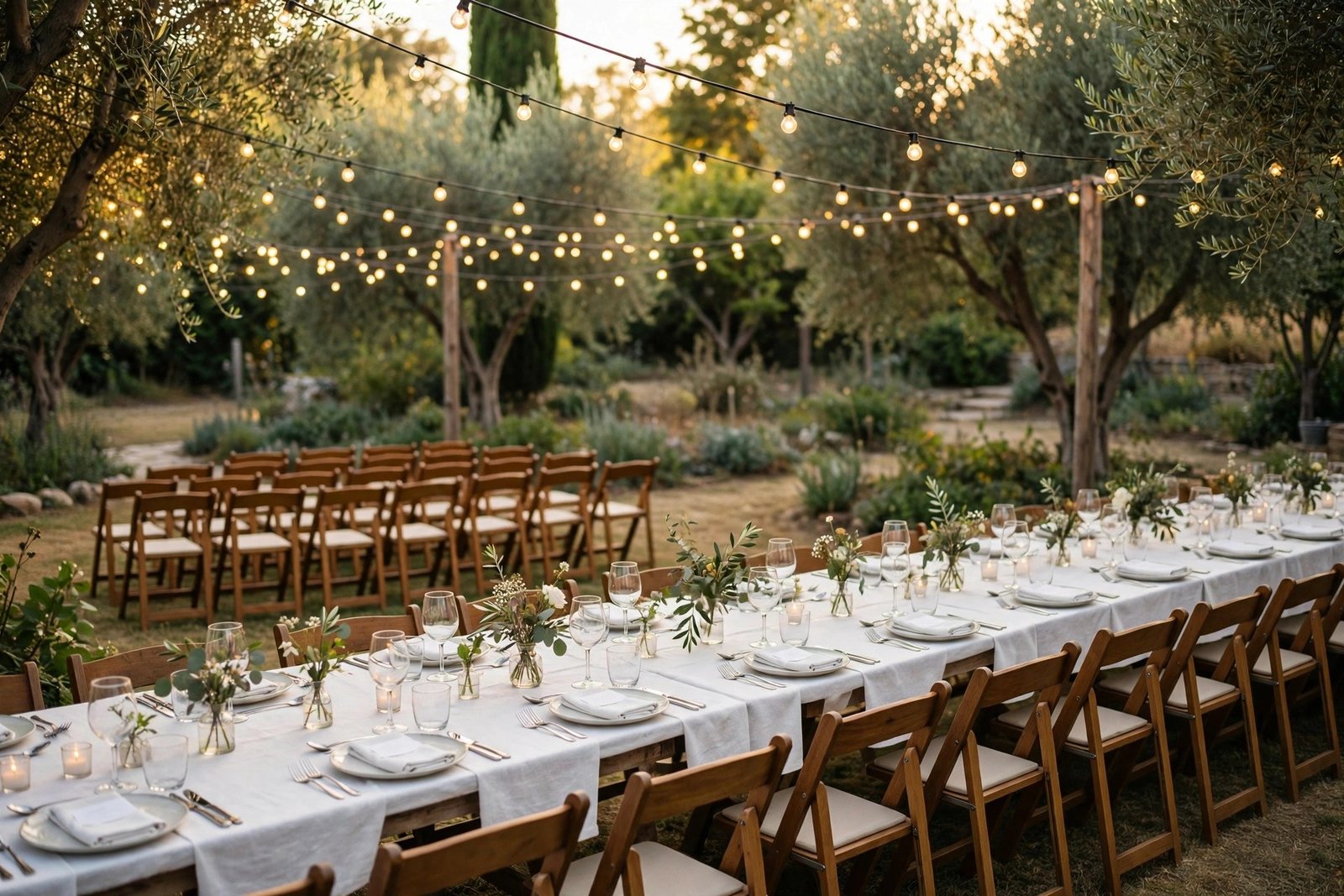
A small wedding takes 3 to 9 months to plan, against 12 to 18 months for a 150-guest wedding. The shorter window works because there are fewer vendors to book and no ballroom to reserve a year out. The table below is the whole plan in one view; the sections after it fill in each phase.
| Phase | When | The 3 tasks that matter |
|---|---|---|
| 1. Count and budget | 9 months out | Set the guest ceiling, set the total budget, pick the date range |
| 2. Venue and food | 7 to 8 months out | Book the room, lock the menu and per-guest price, sign the contract |
| 3. Core vendors | 5 to 6 months out | Book the officiant, photographer, and music |
| 4. Guests | 3 to 4 months out | Send invitations, collect RSVPs, set the final headcount |
| 5. Details | 1 to 2 months out | Attire, flowers, cake, license, day-of schedule |
| 6. Wedding week | Final 7 days | Confirm every vendor, pack, rehearse, marry |
One rule governs the whole timeline: never book a venue before the guest count is set. A 30-guest list in a 150-guest room pays for 120 empty chairs, and a 50-guest list in a 30-guest room does not fit at all.
Set Your Guest Count First: 3 Size Tiers
Small weddings fall into 3 tiers, and the tier decides the venue, the food format, and the budget. Pick the tier before you pick anything else.
| Tier | Guests | What it looks like | Planning time |
|---|---|---|---|
| Elopement | Up to 10 | Ceremony plus dinner, often just the couple and witnesses | 6 to 8 weeks |
| Minimony | 11 to 25 | Ceremony plus a seated dinner at one table | 3 to 6 months |
| Micro wedding | 26 to 50 | Ceremony plus dinner and dancing, still one room | 6 to 9 months |
The tiers matter because every guest adds cost and complexity. At 30 guests, one extra guest is a 3 percent budget increase. At 150 guests, one extra guest is rounding. That is why small weddings need a hard ceiling: say the number out loud — “30 guests, no plus-ones except long-term partners” — and write it down before anyone starts adding names.
Set the ceiling with 3 rules. First, invite only people you have shared a meal with in the past year. Second, cap the wedding party at 4 people; a party of 12 needs a rehearsal, matching outfits, and 12 gifts. Third, decide the plus-one rule once and apply it to everyone: long-term partners yes, casual dates no. One exception for one cousin becomes 6 exceptions by the end of the week.
What a Small Wedding Costs: $10,000 for 30 Guests
A small wedding runs $5,000 to $15,000 all-in for 10 to 50 guests in most US cities, with the per-guest cost landing between $250 and $500. The table below shows how the per-guest cost moves with size. The worked budget after it shows where every dollar of a $10,000 wedding goes.
| Guests | Typical total | Cost per guest | What changes |
|---|---|---|---|
| 10 | $5,000 to $7,000 | $500 to $700 | Fixed costs dominate: venue, photographer, officiant |
| 20 | $7,000 to $10,000 | $350 to $500 | Food and drink pass the fixed costs |
| 30 | $10,000 to $13,000 | $333 to $433 | The sweet spot: full dinner, still one room |
| 50 | $13,000 to $15,000 | $260 to $300 | Cheapest per guest, needs a bigger room |
The pattern is clear: the per-guest cost falls as the list grows, because the fixed costs — venue, photographer, officiant — spread across more people. But the total still rises with every guest, so a smaller list is still the most reliable way to spend less. Cutting 20 guests from a 50-guest list saves about $5,000 at $250 per guest.
Here is a full $10,000 budget for 30 guests, with every assumption stated. Say the wedding is a Saturday dinner at a restaurant private room for 30 guests, with a 30-minute ceremony in the same room. The couple buys their own attire. Guests pay their own travel. Prices are typical national ranges, not quotes.
| Line item | Amount | Share |
|---|---|---|
| Venue and food (30 guests at $150 each) | $4,500 | 45% |
| Photography (4 hours) | $1,500 | 15% |
| Attire (2 outfits + accessories) | $1,200 | 12% |
| Flowers and decor | $800 | 8% |
| Officiant | $400 | 4% |
| Music (solo musician, 2 hours) | $600 | 6% |
| Cake and dessert | $300 | 3% |
| Contingency (about 7%) | $700 | 7% |
| Total | $10,000 | 100% |
Food and drink is 45 percent of the total, which matches the usual 40 to 45 percent range for venue and food. Photography is the second-biggest line at 15 percent: 4 hours covers the ceremony, dinner, and portraits, and a 4-hour booking costs far less than a 10-hour one. The contingency is the line that saves you when the final headcount moves by 2 guests or the cake costs $50 more than the quote. Re-do this table with your own numbers: change the guest count first, then the per-guest food price, then everything else.
Venues That Fit 30 Guests: 4 Options That Work
A venue built for 150 guests is the wrong room for 30 people, even if the photos are beautiful. The 4 options below all fit a 30-guest list, and each one has a different cost trap.
| Venue | Fits | Typical cost | Watch out for |
|---|---|---|---|
| Restaurant private room | 20 to 50 | $3,000 to $6,000 food and drink minimum | Minimum spend: a $5,000 minimum for 10 guests is $500 per guest |
| Backyard or family home | 10 to 40 | $1,000 to $3,000 rentals | Rentals, restrooms, and power add $1,000 to $2,000 |
| Park or public garden | 10 to 50 | $100 to $500 permit + rentals | Permit rules, noise limits, no alcohol without a permit |
| Small chapel or inn | 20 to 50 | $2,000 to $5,000 | Packages built for 100 guests with items you do not need |
The minimum-spend trap is the one that costs small weddings the most. A restaurant with a $5,000 food and drink minimum charges $5,000 whether 10 people eat or 50 people eat. At 10 guests that is $500 per guest; at 30 guests it is $167 per guest. Ask for the minimum in writing before you tour, and walk away from any room whose minimum is more than double your food budget.
A backyard wedding looks cheap until you price the rentals: a tent, tables, chairs, lighting, a generator, and portable restrooms run $1,000 to $2,000 for 30 guests, on top of the food. A park permit runs $100 to $500, but most parks ban alcohol without a separate permit and cap noise at 10 pm. Check the permit rules before you send invitations, not after.
The Guest-List Cut: How to Say No Without Losing Friends

Cutting the list is the hardest part of a small wedding, and it is also the part that saves the most money. Every guest you cut saves about $250 to $400 in food, drink, chairs, and cake. Cutting 10 guests from a 40-guest list saves $2,500 to $4,000 — enough to pay for the photographer.
Use 3 scripts, one for each hard conversation. For a plus-one you cannot include: “We are keeping the wedding to 30 people, so we are not able to include plus-ones except long-term partners. We hope you can still come.” For a coworker: “We are keeping it to family and our closest friends, so we are not inviting coworkers. Thank you for understanding.” For a distant relative: “We wish we could invite everyone, but the room holds 30 people and the list is set. We will share photos after.”
Three rules keep the scripts working. First, tell people early: 4 months out, not 4 weeks out. Second, never blame the budget; blame the room size, which is true and final. Third, keep one list, not two: a B-list that gets invited when someone declines creates 2 rounds of hurt instead of one. Set the list once, send the invitations, and stop re-deciding it.
What to Skip and What to Keep: 5 Decisions
A small wedding lets you skip the items built for big rooms. Skip these 5 and save $2,000 to $4,000: favors ($150 to $300 for 30 guests), ceremony programs ($100 to $200), a videographer ($1,000 to $2,000), a band ($1,500 to $3,000 — a solo musician at $600 covers 30 guests), and a hotel room block (local guests do not need one). Keep the photographer: 4 hours at $1,500 is the one line guests and couples both remember.
What you still need, even at 10 guests: the marriage license, the officiant, an exact headcount for the food, and a plan for how people eat. The license is the item couples forget most often, and it is the only one that can stop the wedding. Call the county clerk 2 months out and ask 4 things: the fee, the waiting period, the expiration date, and how many witnesses you need. The rules change by county, so the answer for your county is the only one that counts.
5 Mistakes That Cost Small Weddings Thousands
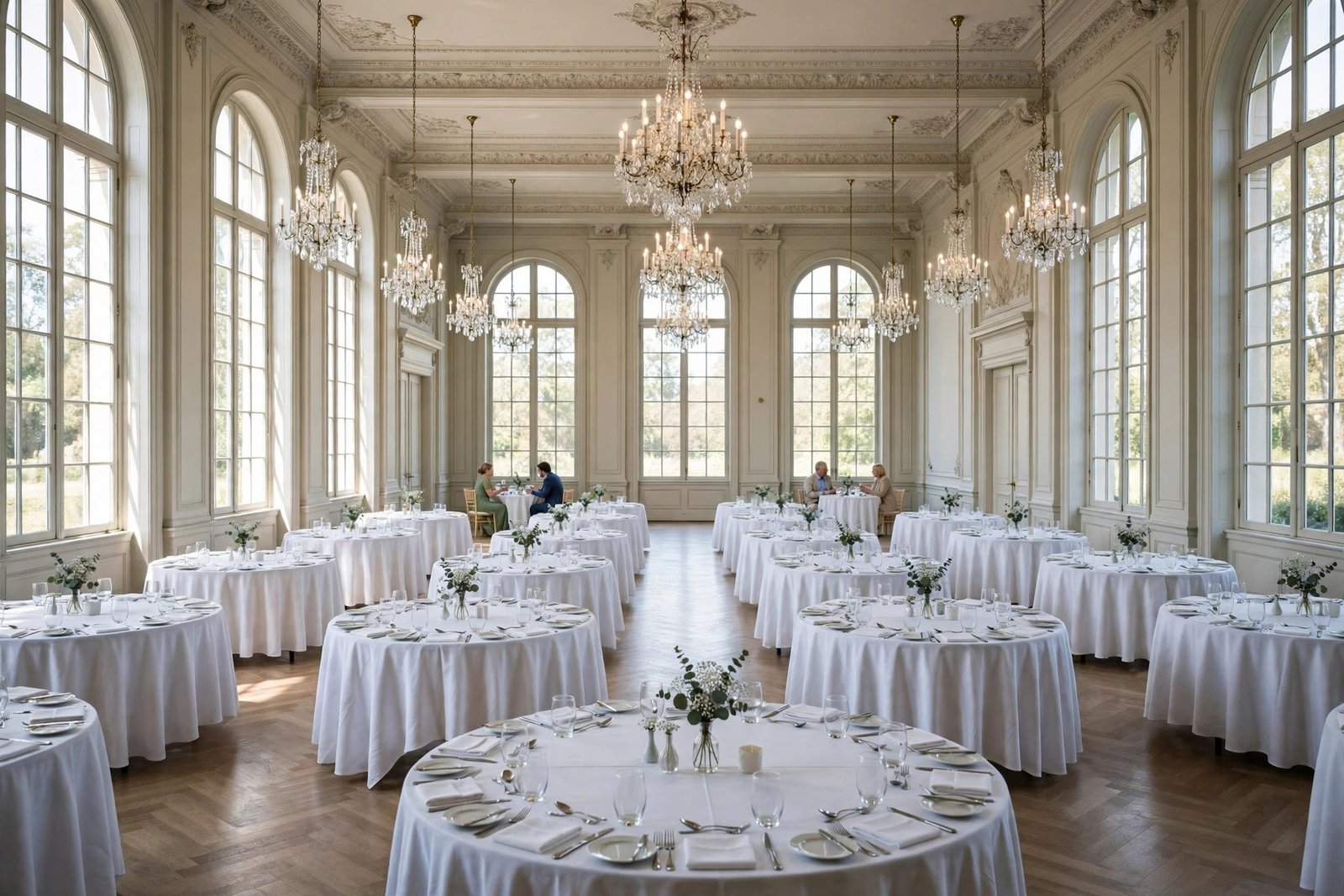
Every mistake below has a fix that costs little or nothing. The expensive part is finding out after the deposits are paid.
| Mistake | What it costs | The fix |
|---|---|---|
| Booking a 150-guest room for 30 guests | A $5,000 minimum spend for 10 diners is $500 per guest | Ask the minimum in writing before the tour |
| No hard guest ceiling | 10 extra guests at $300 each is $3,000 | Set the ceiling before the venue search |
| Sending save-the-dates to 60 people | 60 people expect invitations; cutting 30 of them later costs friendships | Send invitations only to the final list |
| Forgetting the marriage license | No license means no legal marriage; a second ceremony costs $400 to $800 | Call the county clerk 2 months out |
| Hiring a 10-hour photographer for a 4-hour day | $1,500 to $2,500 extra for hours with nothing to shoot | Book 4 hours and put the hours in the contract |
Printable Small Wedding Checklist: 30 Guests, 9 Months
Print this list and fill in your own dates, counts, and quotes. Check each item off as you book it.
- 9 months out: Set the guest ceiling (___ guests). Set the total budget ($___). Pick the date range.
- 8 months out: Tour 3 venues that fit your count. Ask each one for the food and drink minimum in writing.
- 7 months out: Book the venue. Sign the contract. Pay the deposit (usually 25 to 50 percent).
- 6 months out: Book the officiant ($400) and the photographer (4 hours, $1,500).
- 5 months out: Book the musician (2 hours, $600). Order the cake ($300).
- 4 months out: Send invitations to the final list only. Tell anyone not invited, kindly, before the invitations go out.
- 3 months out: Choose attire. Order flowers ($800). Confirm the menu and the per-guest price.
- 2 months out: Call the county clerk for the license rules. Collect RSVPs. Set the final headcount.
- 1 month out: Confirm every vendor in writing. Share the day-of schedule with the venue and photographer.
- Wedding week: Pick up the license. Pack the rings, the vows, and the payment envelopes. Rehearse on site.
Time Budget: 25 Hours of Planning
Plan on about 25 hours of work across 9 months for a 30-guest wedding, against 40 to 60 hours for a 150-guest wedding. The smaller list cuts the hours in 3 places: fewer vendor calls, one room instead of a ceremony site plus a reception site, and a guest list that fits on one page.
| Task | Hours | Who |
|---|---|---|
| Guest list + budget | 3 | Couple |
| Venue tours + contract | 5 | Couple |
| Core vendors | 4 | Couple |
| Invitations + RSVPs | 4 | Couple |
| Details (attire, flowers, cake) | 5 | Couple |
| License + final confirmations | 2 | Couple |
| Wedding day, on site | 2 | Couple + venue team |
| Total | 25 hours |
Start 9 months out and the 25 hours spread to about 3 hours a month. Start 6 weeks out and the same 25 hours land in 4 hours a week, on top of everything else in your life. A day-of coordinator is rarely needed at 30 guests, but if the venue gives you a bare room with no staff, 10 hours of help on the day is worth budgeting for.
Frequently Asked Questions
Hover or tap any question below to reveal the answer.
How many guests is a small wedding?
Under 10 is an elopement, 11 to 25 is a minimony, and 26 to 50 is a micro wedding. The number matters less than the shape: one room, one table or a few tables, and no ballroom.
How much does a small wedding cost?
A 30-guest wedding runs about $10,000, or $333 per guest. The per-guest cost falls as the list grows, but the total still rises with every guest.
How far in advance should you plan a small wedding?
A 30-guest wedding takes about 9 months; a 10-guest elopement takes 6 to 8 weeks. Book the venue 7 to 8 months out and send invitations 4 months out.
What is the difference between a small wedding and a micro wedding?
Small wedding is the wider term and covers elopements up to 10 guests, minimonies of 11 to 25, and micro weddings of 26 to 50.
Do you need save-the-dates for a small wedding?
Send invitations 4 months out to the final list only. Save-the-dates go to people who might not be invited, which creates the exact problem a small list is meant to avoid.
Can you have a small wedding at a restaurant?
Ask for the food and drink minimum in writing first: a $5,000 minimum for 10 guests is $500 per guest, while the same minimum for 30 guests is $167 per guest.
What do you skip at a small wedding?
Keep the photographer, the officiant, the marriage license, and an exact headcount for the food.