

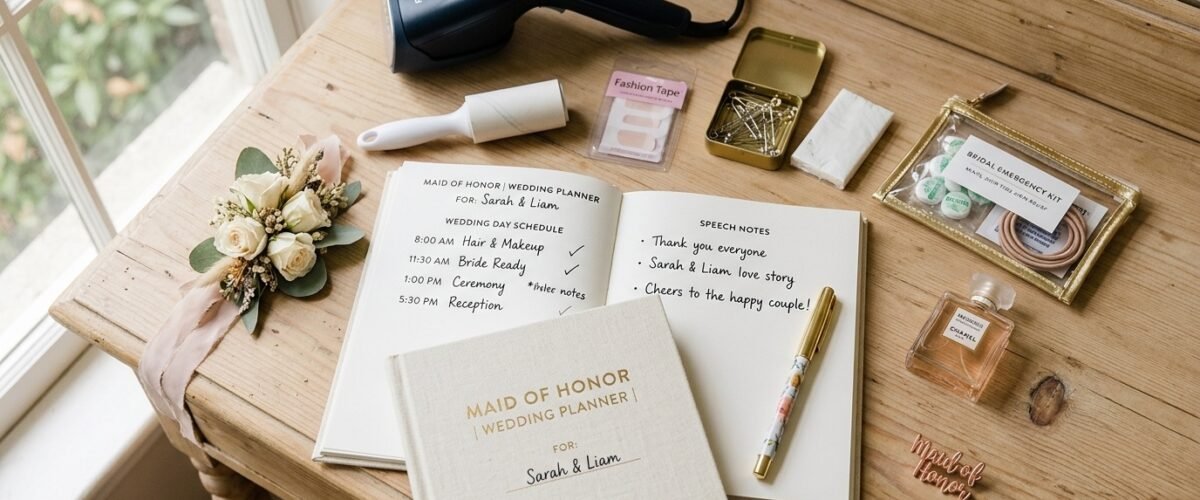
A structured maid of honor planner organizes fourteen core duties across four distinct planning phases. You should begin your duties as soon as the bride chooses you. Many chief attendants think their job is simple. In fact, they think it only involves throwing a party and holding flowers. However, a great maid of honor serves as the bride’s right hand. You stay by her side all day. In fact, you manage group chats and dress fittings. You also calm wedding day nerves and fix broken train bustles. In contrast, failing to plan leads to missed photo windows and avoidable stress.
I have directed hundreds of weddings over fourteen years as a lead wedding planner. In fact, the smoothest weddings always have a prepared maid of honor standing by the bride. When you follow this practical maid of honor planner, you protect the bride’s peace of mind. You also keep the bridal crew on schedule all day. This complete guide gives you phase-by-phase checklists, emergency kit packing lists, speech writing formulas, and bustle guides.
Master Maid of Honor Planner: The 4-Phase Duty Architecture
First, review the four main phases of your role before wedding planning kicks into high gear. A clear duty matrix makes sure you know what tasks need your attention each month.
Master Maid of Honor Duty and Timeline Matrix
| Planning Phase. | Core duties. | Key Tools and Lists. | Critical Buffer Time. | Lead planner Advice. |
|---|---|---|---|---|
| Phase 1: Early Prep. | Dress shopping visits, group chat setup, and emotional support. | Bridesmaid contact list and shared budget sheets. | Six to nine months prior. | Collect bridesmaid budget limits privately before planning trips. |
| Phase 2: Pre-Wedding Parties. | Bridal shower hosting and bachelorette party travel booking. | Party itinerary, gift logs, and packing lists. | Two to four months prior. | Book group lodging early and collect money before paying down payments. |
| Phase 3: Wedding Week. | Dress steaming, rehearsal walkthrough, and tip slip prep. | emergency kit, vow printouts, and shoe pads. | Forty-eight hours prior. | Attend the final dress fitting to learn the exact bustle steps. |
| Phase 4: Wedding Day. | Suite vibes, train sweeps, ring holding, and toast delivery. | Run of show schedule, speech notes, and safety pins. | Day-of morning to midnight. | Keep the bride hydrated and fed before the ceremony begins. |
Related: Bridal Book Checklist: How to Build the Ultimate Wedding Planning Binder
Phase 1: Pre-Wedding Planning and Emotional Support Duties
Your journey begins months before the vows. Establishing clear communication early prevents misunderstandings among the bridal party.
Dress Shopping Appointments and Honest Style Feedback
First, accompany the bride to her gown shopping appointments. Take clear photos and short videos of each dress from every angle. In addition, offer gentle, honest feedback while keeping the bride’s own taste front and center. Once she picks her gown, note the designer name. Also, note the exact color code. Having these details helps you guide the bridesmaids. In short, it makes ordering dresses simple.
Managing Bridesmaid Group Chats Without Drama
Next, set up a dedicated communication channel for the bridal party. You can use group messaging apps or shared email threads. In fact, keep all budget talks private. Ask each bridesmaid for her spending zone privately. In fact, never ask in front of the whole group. Never put attendants on the spot in front of the whole group. Respecting financial boundaries keeps the bridal crew happy and united.
Bridal Shower and Bachelorette Budget Tracking
Finally, create a simple shared spreadsheet for party expenses. List estimated costs for party favors, food, decorations, and group lodging. Break down the per-person total clearly so everyone knows their share. In addition, give bridesmaids clear payment dates. Next, collect money before booking events. Collecting funds before booking activities stops you from covering party bills on your own credit card.
Phase 2: Bridal Shower and Bachelorette Party Coordination
Mid-way through planning, focus turns to celebrating the bride. Running structured events keeps parties fun, affordable, and stress-free for all guests.
Building the Bachelorette Itinerary and Payment dates
First, design a balanced bachelorette party itinerary. Avoid over-scheduling every minute of the weekend. Instead, plan one main group activity each day. For example, book a boat cruise or a cooking class. Leave open blocks for pool lounging and naps. In fact, downtime keeps everyone cheerful. In addition, build a payment schedule. Collect fifty percent of lodging costs four months early and the rest sixty days out.
Bridal Shower Gift Recording and Thank-You Note Prep
Next, take charge of gift tracking during the bridal shower. Sit beside the bride as she opens presents. Next, hold a clean notebook or tablet ready. Record each guest’s full name. In addition, write down the exact gift they gave. In fact, note small details, like whether the item came with a handmade card. This gift log saves the bride hours of work. In fact, she can write thank-you notes with ease.
Handling Out-of-Town Attendant Travel plans
Finally, assist out-of-town bridesmaids with airport rides and hotel bookings. Share hotel links early. Also, share airport shuttle schedules with all guests. If several bridesmaids arrive around the same time, coordinate a shared rideshare. Helping friends travel smoothly builds a warm, supportive mood before the big weekend arrives.
Phase 3: Wedding Week Prep and Rehearsal Dinner duties
Wedding week requires sharp organizational skills. Handling small details early protects the bride from last-minute panic.
The 48-Hour Wedding Wardrobe and Steam Check
First, inspect all wedding party dresses forty-eight hours before the vows. Unpack gowns right away. Next, hang them high on door frames to release packing folds. Use a handheld garment steamer with distilled water. In fact, steam smooths out stubborn wrinkles in minutes. In addition, check that every bridesmaid has the right nude undergarments, shoes, and jewelry ready to wear.
Rehearsal Dinner Walkthrough and Processional Cues
Next, take an active role during the wedding ceremony rehearsal. Listen closely to the planner or officiant as they explain walking paces and spacing. Note where you should stand at the altar to leave room for the bride’s train. In addition, practice taking the bridal bouquet and turning smoothly. Knowing your marks makes sure the real walk down the aisle looks polished.
Collecting Vendor Tipping slips and Important Items
Finally, collect the bride’s labeled tipping slips at the rehearsal dinner. Check that each slip clearly states the vendor name and cash tip amount. Store these slips in a secure zippered pouch inside your bag. In addition, take charge of the marriage license and ring boxes if asked. Safeguarding these items takes heavy weight off the couple’s shoulders.
Phase 4: Day-Of Timeline Management from Morning to Midnight
On wedding day, you serve as the operational captain inside the bridal suite. Keeping the room calm and on schedule sets a joyful tone for the whole big day.
Morning Hair and Makeup Schedule Coordination
First, print the morning hair and makeup schedule and tape it to the vanity mirror. Standard schedules budget forty-five minutes per bridesmaid. In addition, budget ninety minutes for the bride. Add an unconditional forty-five-minute buffer before photos begin. In fact, hair and makeup runs late at many weddings. In addition, make sure attendants sit in the styling chair five minutes before their scheduled time.
Managing the Bridal Suite Environment and Snacks
Next, protect the energy inside the dressing room. Keep background music cheerful and volume low. Make sure the room stays stocked with cold water and fruit. Also, provide protein bars and light sandwiches. In fact, brides often forget to eat due to nerves. Offer small snacks throughout the morning. In fact, steady sips of water prevent faintness during outdoor photos.
Bustle Execution and Transition to the party Floor
Finally, take charge of bustling the gown right after couples portraits wrap up. Guide the bride into a private room away from the crowd. Next, take a calm breath before bustling. Fasten each button loop patiently using the diagram you learned at the final fitting. Bustling the train before the grand entrance allows the bride to walk into dinner with confidence.
The Maid of Honor Bridal Emergency Kit Checklist
A well-stocked emergency kit solves minor wardrobe and beauty mishaps in seconds. Pack these essentials in a clear travel pouch and keep them nearby all day.
Wardrobe Fixes: Safety Pins, Seam Tape, and Clear Snaps
First, pack heavy-duty wardrobe repair tools. Include varied sizes of safety pins and clear thread. Also, pack double-sided fashion tape and needles. Also, pack extra clear buttons and small shears. If a hem stitches loose, you can fix it on the spot. In addition, use chalk to mask small stains on white fabric. In addition, pack chalk to mask small stains on white bridal fabric.
Beauty Touch-Ups: Blotting Paper, Hair Pins, and Setting Spray
Next, assemble essential beauty touch-up items. Include oil blotting sheets and lip gloss. Also, pack translucent powder and hairspray. Also, pack twenty bobby pins matching the bride’s hair color. Wind can loosen hair during outdoor photos. If this happens, you can pin loose strands in thirty seconds flat. In addition, include a mini lint roller to remove fuzz from suits.
Medical and Comfort Gear: Blister Cushions, Mints, and Pain Relievers
Finally, pack everyday comfort and health supplies. Include blister pads and breath mints. In addition, pack ibuprofen, antacids, and eye drops. In addition, pack a small pack of tissues for happy tears during vows. Having these simple supplies handy prevents small headaches or shoe blisters from slowing down the party.
How to Write and give an Unforgettable Maid of Honor Speech
giving your speech is one of your biggest moments as maid of honor. Following a proven framework helps you write a warm, memorable toast without stage fright.
The 3-Minute Rule and Five-Part Speech Architecture
First, keep your speech between two and three minutes long. That equals about three hundred to four hundred written words. In fact, guests lose interest when toasts drag on. Therefore, keep your remarks between two and three minutes. Structure your remarks into five simple parts. First, greet the room. Next, praise the bride. Then, share a sweet memory. Also, praise her partner. Finally, raise your glass in a warm toast.
Opening Hooks That Captivate the Room Immediately
Next, craft a strong opening line that grabs attention. Introduce yourself to the room. Next, state your bond with the bride and share a sweet detail. For example, mention how long you have known her or what she told you after her first date with her partner. Avoid private jokes that leave the room confused. In contrast, clear stories invite everyone to share in the joy. Clear stories invite everyone to share in the joy.
Balancing Humor, Genuine Emotion, and Partner Tributes
Then, balance funny memories with sincere gratitude. Speak directly about the bride’s best qualities, like her loyalty and kindness. Next, turn your focus toward her new partner. Share how happy the partner makes her and how well they complement each other. Highlighting both people shows true support for their new marriage.
Three Red Flag Mistakes That Ruin Wedding Speeches
Finally, avoid common toast pitfalls that cause discomfort. Never mention ex-partners, past party habits, or awkward college mistakes. Also, avoid drinking too much alcohol before your speech. Practice reading your toast aloud three times from an index card. In short, reading from paper looks polished and poised. Reading from paper looks far more polished than scrolling on a smartphone screen.
Managing the Train, Bouquet, and Ring During the vows
During the vows, all eyes focus on the altar. Executing your three main ceremonial duties with precision keeps the bride looking radiant in photos.
The Altar Train Adjustment: The Smooth Sweep Technique
First, master the train adjustment as soon as the bride reaches the altar steps. Step forward calmly at the altar. Next, sweep her gown train outward into a clean semi-circle. Make sure the fabric drapes evenly. In addition, straighten her veil so it flows gracefully across the floor. Once the skirt looks perfect, step back into your position with a smile.
Holding Both Bouquets Without Crushing fine Stems
Next, take the bride’s bouquet right before the officiant begins opening remarks. Hold both bouquets in your left hand. Next, rest the stems gently against your hip. Keep the blooms angled slightly forward toward the guests. Holding bouquets near your hip keeps your posture relaxed. In addition, it leaves your right hand free to pass tissues.
Safeguarding the Groom’s Ring Until the Ring Exchange
Finally, safeguard the groom’s wedding band if you are entrusted with it. You can wear the ring on your thumb or keep it secure in a small velvet pouch inside your bouquet ribbon. When the officiant calls for rings, pass the band smoothly to the bride. In fact, a calm hand keeps the moment flowing with grace. A calm, steady hand keeps this sacred moment flowing without fumbles.
Bustling the Gown: The Maid of Honor’s party Mission
Bustling the wedding dress is one of your most critical technical jobs. Knowing how to lift the train quickly lets the couple join their party dinner on time.
Practicing the Bustle at the Final Fitting Visit
First, attend the bride’s final alteration fitting two weeks before the big day. Ask the tailor to show you every button loop in detail. Also, film a quick video on your phone as they fasten each point. Film a clear two-minute video on your phone as the tailor fastens each point. In addition, ask the tailor for extra safety pins in case a loop pulls free on the dance floor.
Fastening French vs American Bustles Under Pressure
Next, learn the difference between common bustle styles. American bustles lift the train up onto outside buttons. In contrast, French bustles fold the train under using colored ribbon ties. In contrast, French bustles fold the train under using color-coded ribbon pairs sewn inside the skirt. Match the colored ribbons: blue to blue, white to white. Work from the center outward to create balanced folds.
Quick 2-Minute Fixes When Bustle Loops Snap on the Dance Floor
Finally, be ready for broken bustle hooks during open dancing. When guests crowd the dance floor, someone may step on the train. If a loop snaps, do not try to sew buttons in the bathroom. Instead, reach under the skirt lining and pin the fold with safety pins. Instead, reach under the skirt lining. Pin the train fold from the inside using three strong safety pins. Pinning from inside hides the pins and lets the bride dance all night.
End-of-Night Wrap-Up: Gifts, Keepsakes, and Suite Cleanup
As the party ends, your final duties make sure the couple’s belongings stay safe. Handling cleanup allows the newlyweds to make a joyful grand exit.
Securing the Card Box and Wedding Gifts
First, take charge of the card box and gift table forty-five minutes before the party closes. Place all cards and cash slips into a locked travel bag or pass them directly to the parents of the couple. In addition, load boxed gifts into a family car. Securing gifts early stops theft and prevents lost envelopes. Securing cards early stops theft and prevents lost slips.
Packing the Bride’s Overnight Bags and Keepsake Florals
Next, collect the couple’s own belongings from the bridal suite. Pack up her change of clothes and makeup bag. Also, collect phone chargers and flats. In addition, save her bridal bouquet and own ceremony programs. Place these treasured keepsakes in a clean bag so the couple can preserve them after the honeymoon.
Ensuring the Bridal Suite Leaves No Belongings Behind
Finally, do a thorough sweep of the bridal dressing room before turning off the lights. Check closet hooks, bathroom counters, under chairs, and electrical wall outlets. Verify that no bridesmaid left behind dress bags or shoes. In short, leaving the suite tidy protects the couple’s cleaning deposit. Leaving the suite tidy makes sure the venue returns the couple’s full cleaning deposit.
The Morning-Of Dressing Room Protocol and Atmosphere
First, managing the dressing room environment is an art form. In fact, a calm suite keeps the bride smiling and prevents wedding morning headaches.
Managing Family Visitors and Vendor Deliveries
First, serve as the polite gatekeeper for the bridal suite. Well-meaning relatives often crowd into the room to take photos. As a result, hair and makeup stylists lose space and fall behind schedule. Kindly ask visitors to relax in the venue lounge until the bride is dressed. In addition, accept floral deliveries and food trays at the suite door. Checking off deliveries keeps the bride relaxed in her styling chair.
The 30-Minute Final Robe-to-Gown Dressing Window
Next, budget a full thirty minutes to get the bride into her dress. Do not rush this step fifteen minutes before the photographer arrives. First, have the bride use the restroom. Then, slip her into her shoes before stepping into the dress. In addition, ask the mother of the bride and maid of honor to wash their hands before touching white silk. Fasten buttons slowly with a crochet hook to avoid pulling fine fabric loops.
Post-vows Cocktail Hour Duties and Photo Coordination
Cocktail hour is when the schedule often slips. Acting as the bride’s own assistant keeps photos moving and makes sure the couple stays fed.
Gathering Family Members for Formal Group Shots
First, help the photographer run through the family shot list right after the recessional. Stand near the photographer with a printed copy of Tab 5 from the bridal book. Call out the names of the next family grouping in a clear, friendly voice. In fact, keeping relatives nearby prevents the photographer from hunting for missing uncles. Rapid family photos let everyone join cocktail hour sooner.
giving Signature Drinks and Appetizers to the Bridal Suite
Next, coordinate with the lead food captain to stage food in the bridal suite. While guests enjoy cocktail hour, the newlyweds often spend forty-five minutes taking sunset portraits. Ask the caterer to set aside a plate of warm hors d’oeuvres and two signature drinks in the dressing room. Offering food to the couple before the grand entrance gives them quiet time to recharge.
Using a detailed maid of honor planner turns a high-pressure role into an unforgettable honor. By managing your four planning phases, carrying a smart emergency kit, and mastering the bustle, you become an irreplaceable source of joy. Celebrate each step of the journey, and help your best friend walk down the aisle with calm and happiness.
Editorial Note: This article has been researched, written, and fact-checked by our experienced wedding planning team. Every guide is manually reviewed by our lead author to ensure accurate and reliable advice.
Frequently Asked Questions
Hover or tap any question below to reveal the answer.
What is the most important duty of a maid of honor?
You manage the morning schedule, keep stress low, fix wardrobe issues, and give a loving toast.
How much does a maid of honor typically spend on wedding duties?
This covers her bridesmaid dress, alterations, travel, bridal shower hosting, and bachelorette party costs.
When should the maid of honor write her speech?
Drafting your toast early gives you time to practice reading it aloud and polish the timing to under three minutes.
Who holds the groom’s ring during the vows?
Keep it safe on your thumb or in your bouquet.
What should you do if bridesmaids disagree during party planning?
Focus on finding budget-friendly compromises that prioritize what the bride loves.
Can the maid of honor leave the wedding before the grand exit?
You help secure gifts, pack overnight bags, and make sure the dressing suite is left clean for the venue.