
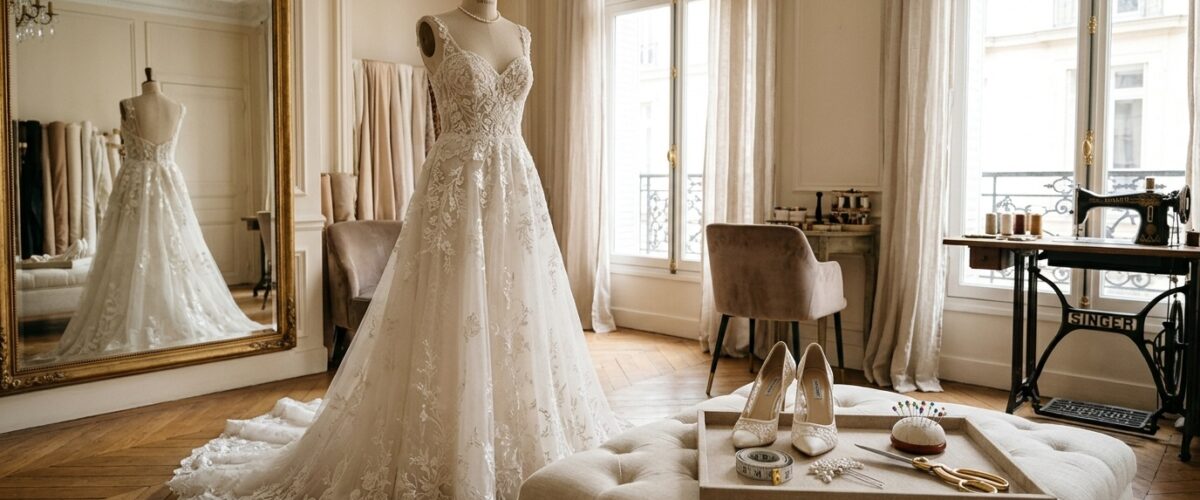
A proper wedding dress fitting journey requires three to four appointments spaced across twelve weeks, averaging four hundred eighty to one thousand one hundred sixty dollars in total tailoring alterations. Forgetting your exact wedding shoes or shapewear to a fitting invalidates hemline measurements instantly. Structuring your alteration appointments according to a strict timeline ensures your gown drapes comfortably and bustles securely on wedding day.
As a lead wedding coordinator with fourteen years managing bridal wardrobe emergencies, I see alteration oversights cause immense stress every season. Specifically, brides schedule fittings too late, leaving seamstresses rushing complex lace adjustments days before departure. Gown alterations require precise fabric sculpting across multiple appointments. Below is your master fitting calendar, essential gear checklist, bustle breakdown, and contract cost guide.
Wedding Dress Fitting: Master 4-Appointment Milestone Schedule
Altering bridal couture requires progressive tailoring stages. Never attempt to adjust hemlines and bodice seams simultaneously during a single appointment.
| Fitting Milestone | Recommended Timing | Primary Alteration Focus | Critical Fitting Inspection |
|---|---|---|---|
| First Fitting | 10 to 12 weeks prior | Bodice pinning, waistline darts, strap length | Check bust cups and overall silhouette alignment |
| Second Fitting | 6 to 8 weeks prior | Skirt hemline pinning, initial train bustle | Walk in shoes to verify floor clearance |
| Third Fitting | 3 to 4 weeks prior | Bustle hook testing, fine seam adjustments | Practice sitting, dancing, and lifting arms |
| Final Fitting & Pickup | 1 to 2 weeks prior | Final try-on, professional pressing & steaming | Inspect zipper glide and complete beadwork |
First, note the first appointment window. Starting twelve weeks prior allows your seamstress adequate time to source matching lace appliques and specialty horsehair braid. In addition, this buffer accommodates rush periods during peak spring and autumn bridal seasons. For overall planning coordination, reference our 12-month wedding planning timeline.
Related: Maid of Honor Planner: Complete Duty Checklist, Timeline, and Speech Guide
What to Bring to Every Wedding Dress Fitting
Your seamstress fits the dress around what you wear underneath. Changing your shoe height or undergarment silhouette between appointments ruins delicate hem measurements.
- Exact Wedding Day Shoes: Bring the exact heels or flats you plan to wear during the ceremony. A half-inch variation alters the skirt drape and causes tripping hazards.
- Bridal Undergarments and Shapewear: Wear the seamless briefs, corset, or smoothing bodysuit you will wear on wedding day.
- Sewn-In Bra Cups: If your dress has an illusion back, bring quality molded bra cups for your tailor to baste into the bodice.
- Wedding Veil and Hair Accessories: Bring your veil to test attachment combs alongside the gown neckline and back buttons.
- Wedding Day Jewelry: Test necklaces and bracelets to verify prongs do not snag delicate embroidered lace.
- Your Maid of Honor or Trusted Attendant: Bring the person responsible for bustling your train on wedding day so they practice the hook system.
In addition, pack an emergency fashion repair kit to keep in your bridal suite. Review our essential bridal emergency kit checklist to stock double-sided tape, sewing needles, and hem tape.
Understanding Bustle Types: French, American and Austrian
Your wedding gown train requires an intentional bustle system to lift delicate fabrics off the floor during your reception dance party. Choosing the correct bustle style protects delicate lace from heel tears.
First, the American bustle lifts the train from the outside and secures fabric to visible buttons along the waistline. This style creates a clean, cascading waterfall effect suited for satin ballgowns. Second, the French bustle folds the train underneath itself using hidden numbered ribbons. This under-tuck technique produces an elegant vintage contour ideal for lace trumpet gowns.
Third, the Austrian bustle gathers fabric vertically using hidden interior pull cords, functioning similar to theater stage curtains. This unique style suits heavy embroidered fabrics with dense train borders. Discuss bustle options with your seamstress during your second wedding dress fitting. For complete day-of packing advice, see our wedding day packing list.
Tailoring Cost Breakdown and Common Alteration Fees
Bridal salon sticker prices rarely include alteration costs. Budgeting accurately for alterations prevents unexpected financial strain during your final planning months.
| Alteration Service | Average Cost Range | Tailoring Complexity |
|---|---|---|
| Skirt Hemline Shortening | $150 to $350 | Multi-layered horsehair braid or horsehair lace adds labor |
| Taking In or Letting Out Sides | $100 to $250 | Boned corset side seams require intricate re-beading |
| Train Bustle Construction | $75 to $200 | Standard 3-point bustle versus elaborate 9-point French bustle |
| Strap Shortening or Adding Sleeves | $50 to $150 | Reinforced shoulder seams support heavy skirt weight |
| Sewn-In Molded Bust Cups | $30 to $60 | Eliminates need for separate strapless bras |
| Professional Gown Steaming & Pressing | $75 to $150 | Restores volume and removes deep travel creases |
Consequently, total alteration invoices typically range from four hundred eighty to one thousand one hundred sixty dollars for standard gowns. Highly customized gowns featuring full lace overlays or crystal beading can reach twelve hundred dollars. Learn more about surprise wedding expenses in our guide on hidden wedding costs.
Wedding Dress Fitting: Essential Alteration Questions to Ask Your Tailor
Before signing an alteration work agreement, ask your seamstress these three critical operational questions:
First, ask whether the tailor stores your gown in a climate-controlled vault between appointments. Proper garment storage protects silk from humidity and dust. Second, ask how many points of contact your train bustle requires. A heavy cathedral train requires seven to nine anchoring buttons to prevent snaps on crowded dance floors.
Third, ask if final professional pressing is included in the alteration quote. Many tailors charge an extra seventy-five to one hundred fifty dollars for steaming unless negotiated into the master proposal. For vendor contract interview guidelines, review our master wedding vendor checklist.
Bridal Party Bustle Training Protocol
The most common wedding reception crisis is a bridal party struggling to bustle a gown during cocktail hour. Implementing a simple video recording protocol eliminates reception delays.
First, have your maid of honor attend your third wedding dress fitting. Instruct her to record a clear, close-up smartphone video while the seamstress connects each button and ribbon. The seamstress should narrate each step, showing how color-coded ribbons match beneath the lining.
Second, assign two attendants to practice bustling the dress together in the fitting salon. When two attendants know the sequence, they can bustle your gown in five minutes in the bridal suite. Consequently, the bride joins cocktail hour promptly without missing family celebrations.
Undergarment Architecture: Corsets, Cups, and Seamless Shapers
Selecting the correct undergarments dictates how smoothly your wedding gown fits over your curves. Specifically, testing undergarments during your first fitting eliminates unsightly seam lines and shifting straps.
First, request sewn-in molded bra cups for low-back and illusion-lace gowns. Sewn-in cups provide natural bust lift and eliminate the frustration of slipping strapless bras. Second, invest in raw-edge seamless shapewear rather than thick-banded corsets. High-waisted raw-edge shorts smooth the midsection without creating visible ridge lines under silk crepe or satin fabrics.
Third, test backless adhesive silicone bras four weeks in advance if your gown features a deep plunge neckline. Wear the adhesive bra for six hours during a warm afternoon to ensure your skin tolerates the medical adhesive without irritation. Consequently, you avoid uncomfortable allergic reactions on wedding day.
Gown Transportation, Storage and Day-Of Steaming Rules
Safeguarding your freshly altered gown during the final forty-eight hours prevents crushing delicate train fabrics. Implementing professional storage rules ensures crisp presentation.
First, transport your wedding gown in a breathable cotton garment bag rather than airtight plastic covers. Plastic bags trap humidity and release chemical fumes that discolor delicate white silk. Second, lay the dress flat across the rear seat of an SUV rather than bunching fabric inside a compact trunk. In addition, hang the gown from a sturdy wooden hanger on a high doorframe as soon as you arrive at the bridal suite.
In addition, pack a stick of plain white chalk in your emergency kit. Rubbing white chalk directly over small makeup smudges or oil spots conceals blemishes invisibly on white wedding fabric minutes before portraits begin.
Finally, steam your veil and gown train from the underside using distilled water only. Tap water deposits mineral stains on delicate lace that show under bright flash photography. Keep a clean white cotton cloth between the steamer nozzle and satin skirts to prevent water spitting.
Alterations, Your Bridal Team, and Hair and Makeup
The fitting is one appointment in a bigger chain: the alterations, the people who help you, and the hair and makeup that finish the look.
Bridal Alterations Cost and How Long Does It Take for Wedding Dress Alterations
Bridal alterations cost usually runs $200 to $600, depending on the dress and the work needed: hemming, taking in the bodice, and adding a bustle. See our Bridal Alterations Cost guide for a full price breakdown. How long does it take for wedding dress alterations? Plan on 8 to 12 weeks from the first fitting to the final one, with three to four appointments. See our How Long Does It Take for Wedding Dress Alterations guide for the full timeline.
Bridal Book, Maid of Honor Planner, and How to Plan a Wedding
A bridal book is your planning binder: contracts, receipts, inspiration photos, and checklists in one place. See our Bridal Book Checklist for how to build one. Your maid of honor planner duties include the bachelorette, the dress shopping trips, and the day-of help. See our Maid of Honor Planner for the full duty checklist. If you are starting from scratch, our How to Plan a Wedding guide covers the full 12-month plan, and how to plan a wedding starts with the budget, the guest list, and the venue.
Wedding Hair Stylist and Bridal Party Hair and Makeup
A wedding hair stylist should be booked 6 to 9 months out, with a trial 4 to 6 weeks before the wedding. See our Wedding Hair Stylist hiring guide for trial questions and pricing. Bridal party hair and makeup needs a schedule too: the bride first, then the bridesmaids, with 45 minutes per person. See our Bridal Party Hair and Makeup guide for the schedule, pricing, and who pays.
Frequently Asked Questions
Hover or tap any question below to reveal the answer.
How many sizes can a wedding dress be altered?
Letting a dress out is more restrictive, typically allowing only one size increase depending on seam allowance.
What happens if you lose weight after your final fitting?
How long does a wedding dress fitting appointment last?
Subsequent fittings take twenty to thirty minutes to inspect seam adjustments and train bustle points.
Should you eat before a wedding dress fitting?
Standing still on a pedestal for an hour while pinned causes lightheadedness on an empty stomach.
Can you alter a wedding dress train to be shorter?
However, creating a functional bustle preserves the dramatic ceremony train while keeping you mobile during dancing.
How much do bridal alterations cost?
How long do wedding dress alterations take?
Start fittings about 3 months before the wedding.